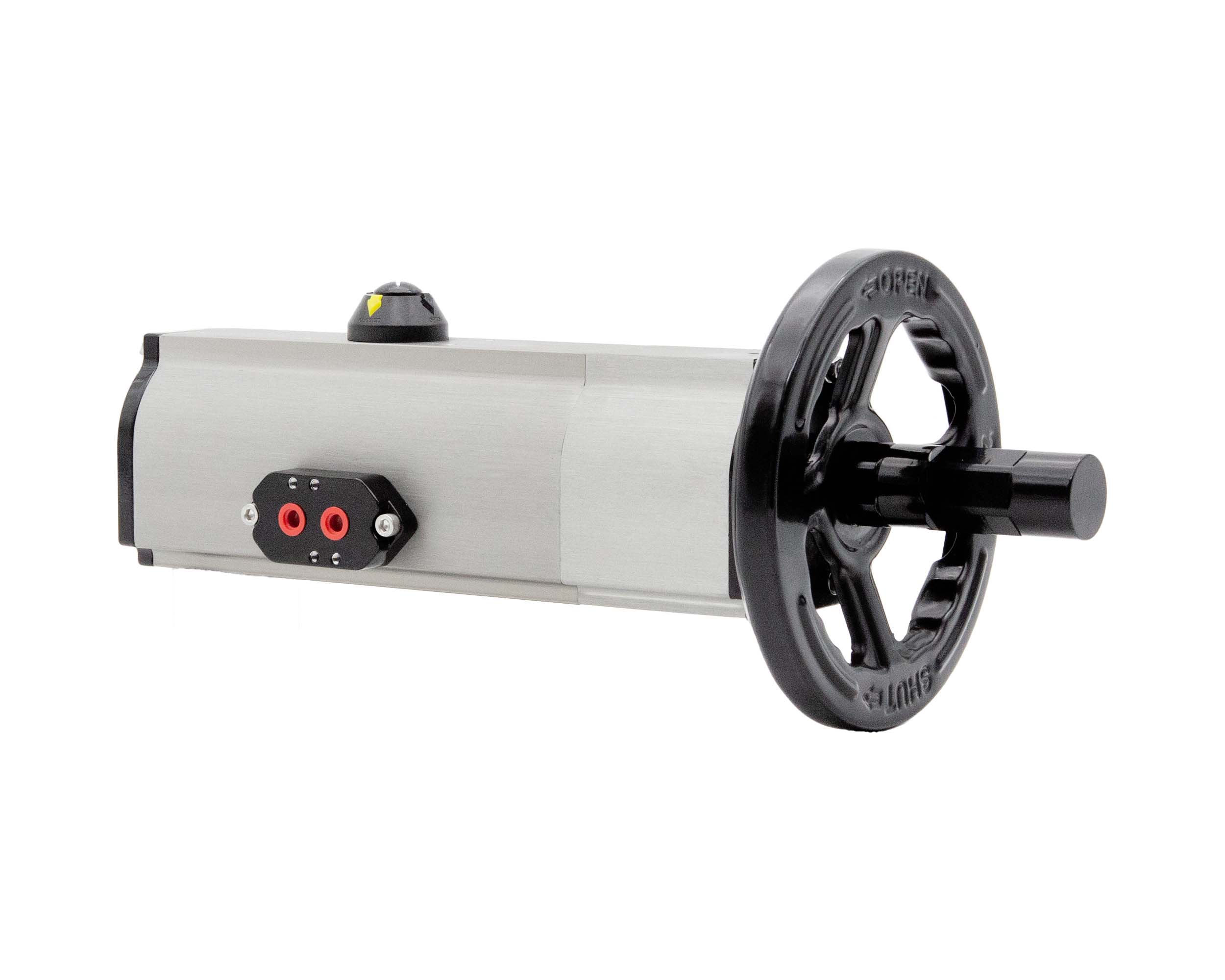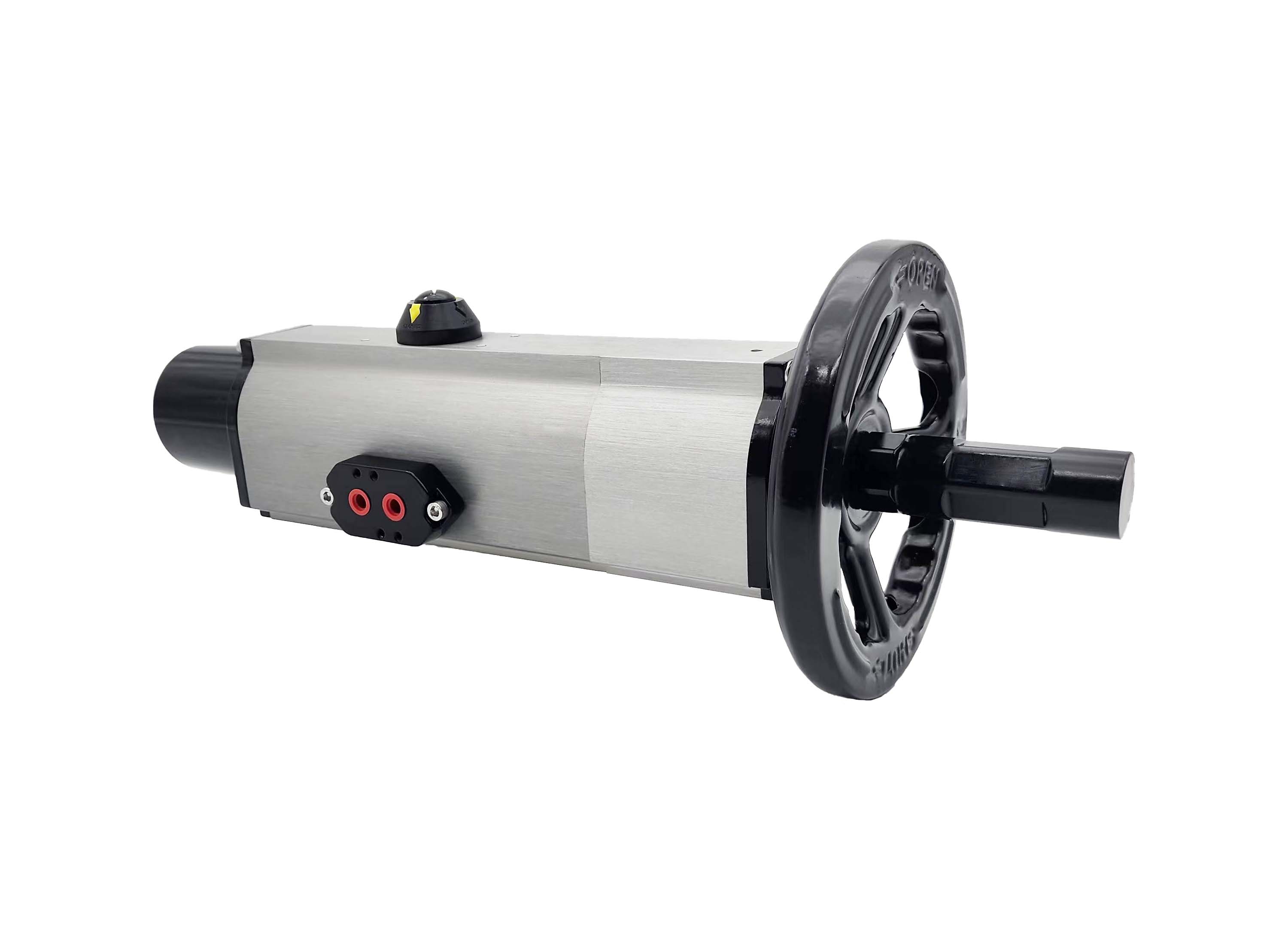








What Is Scotch Yoke Pneumatic Actuator?
 Sep 25, 2025|
 View:1319
In the vast and intricate world of industrial automation, where the precise control of fluids and gases is paramount, the actuator serves as the indispensable muscle behind the process. Among the various technologies available, the Scotch Yoke Pneumatic Actuator stands out as a robust, efficient, and highly reliable solution for operating quarter-turn valves like ball, butterfly, and plug valves. This article delves into the mechanics, advantages, applications, and types of this powerful actuator, and highlights the role of global manufacturing hubs, with a specific look at a leading pneumatic actuator factory in China – KANEDE.
The Heart of the Mechanism: How a Scotch Yoke Actuator Works
To understand why the Scotch Yoke design is so effective, one must first grasp its fundamental mechanism. The name "Scotch Yoke" originates from a classic mechanical linkage system designed to convert linear motion into rotary motion.
The mechanism is elegantly simple and consists of a few key components:
Piston: A single piston or a pair of pistons housed within a cylindrical bore.
Sliding Yoke: A component with a slot or a rectangular opening that is connected to the piston(s). This yoke moves back and forth in a linear fashion.
Pin or Rider: A sturdy pin fixed perpendicularly to the actuator’s output drive shaft. This pin slots perfectly into the opening of the yoke.
Output Drive Shaft: The shaft that provides the quarter-turn (90-degree) rotation to the valve.
The Process of Motion Conversion:
Linear Input: When compressed air is introduced into the actuator cylinder, it forces the piston to move in a straight line.
Yoke Engagement: This linear movement is directly transferred to the sliding yoke.
Rotational Output: As the yoke moves linearly, the slot engages with the pin attached to the output shaft. The interaction between the slot and the pin forces the pin to follow a path, which is constrained by the yoke's movement. This action seamlessly converts the linear motion of the yoke and piston into a precise 90-degree rotary motion of the output shaft.
The key to the Scotch Yoke's high torque output lies in its kinematic principle. The torque profile is not constant; it is sinusoidal. The torque is at its absolute maximum when the piston begins its stroke and the pin is at a 90-degree angle to the direction of the yoke's movement. This characteristic makes it exceptionally powerful for breaking the seat friction of a valve that has been stuck in position, a common challenge in process industries.
Scotch Yoke Pneumatic Actuator for Valves: The Ideal Match
The inherent design characteristics of the Scotch Yoke mechanism make it exceptionally well-suited for valve automation. Here’s why it is a preferred choice for demanding applications:
High Torque Output: As mentioned, the torque generation is highest at the start of the stroke. This "break-to-run" torque is crucial for unseating valves, ensuring reliable operation even after long periods of inactivity.
Compact and Robust Design: The mechanism is mechanically efficient and requires fewer parts than some alternative designs like rack-and-pinion actuators, leading to a robust construction that can withstand high cycle rates and harsh operating conditions.
Durability and Long Service Life: With minimal wear points and the ability to handle high thrust, Scotch Yoke actuators are known for their longevity and minimal maintenance requirements, especially when equipped with self-lubricating bearings and seals.
Fail-Safe Operation (Spring-Return): Scotch Yoke actuators are perfectly adapted for spring-return models. In the event of an air supply failure, powerful springs automatically return the piston and yoke to a predefined "fail-safe" position (either open or closed). This is a critical safety feature for emergency shutdown (ESD) systems.
These actuators are the workhorses in industries such as oil and gas, petrochemical, power generation, and water treatment, where they reliably control the flow in pipelines carrying everything from water to highly corrosive or abrasive media.

Types of Scotch Yoke Pneumatic Actuators
Scotch Yoke actuators are primarily categorized based on their operation and configuration:
Double-Acting Actuators:
Operation: Compressed air is supplied to one side of the piston to drive the valve to one position (e.g., open). To return the valve to the other position (e.g., closed), air pressure is applied to the opposite side of the piston.
Use Case: Ideal for applications where a constant air supply is available and fail-safe operation is not a requirement. They provide consistent torque in both directions.
Spring-Return Actuators (Single-Acting):
Operation: These actuators use air pressure to move the piston against a spring (or set of springs). When the air supply is cut or fails, the stored energy in the springs automatically drives the actuator and valve to its safe position.
Use Case: Essential for safety-critical applications where a valve must close or open upon system failure to prevent accidents, environmental damage, or equipment loss.
Double-Acting with Emergency Close/Open (ECO):
Operation: A hybrid solution that functions as a double-acting actuator under normal conditions but has an auxiliary hydraulic or pneumatic system to provide the fail-safe action, often used when very high spring forces are impractical.
Furthermore, they can be customized with a range of accessories:
Solenoid Valves: For electrical control.
Limit Switches: To provide electrical feedback on the valve's position (open/closed).
Positioners: To proportionally control the valve to any point within the 90-degree rotation for modulating (throttling) applications.
Manual Override: A handwheel or lever to allow manual operation in case of power failure.
The Global Manufacturing Landscape: Pneumatic Actuator Factory in China (KANEDE)
The rise of China as the "workshop of the world" is particularly evident in the industrial valve and actuator sector. Chinese manufacturers have evolved from producing basic components to becoming leaders in quality, innovation, and global supply. Among these, the KANEDE factory has established itself as a prominent name.
KANEDE exemplifies the modern Chinese manufacturing ethos, combining advanced production capabilities with a strong focus on international quality standards. Here’s what sets a factory like KANEDE apart:
Advanced Manufacturing and Quality Control: KANEDE invests in state-of-the-art CNC machining centers, automated assembly lines, and rigorous testing facilities. Each actuator undergoes stringent testing for air tightness, torque output, and operational cycles to ensure reliability that meets or exceeds international standards like ISO 5211, ISO 9001, and ATEX for hazardous environments.
Technical Expertise and Customization: Beyond standard catalog products, factories like KANEDE possess the engineering expertise to provide custom solutions. This includes designing actuators for specific torque requirements, unusual valve interfaces, special coatings for corrosive environments (C4, C5), and extreme temperature ranges.
Cost-Effectiveness without Compromise: By leveraging economies of scale and efficient manufacturing processes, Chinese factories like KANEDE offer a significant competitive advantage. They provide high-quality Scotch Yoke actuators that deliver exceptional performance and durability at a more accessible price point, making automation feasible for a wider range of projects globally.
Global Supply Chain Capability: With a deep understanding of international logistics and certification requirements, KANEDE can reliably supply products to customers in North America, Europe, the Middle East, and Southeast Asia, ensuring timely delivery and technical support.
For engineers and procurement managers specifying actuators for critical applications, partnering with a reputable factory like KANEDE means securing a product that is not only cost-effective but also engineered for performance and longevity.
The Scotch Yoke Pneumatic Actuator remains a cornerstone of industrial valve automation, prized for its simple yet powerful mechanism, high torque output, and exceptional durability. Its suitability for critical and demanding applications makes it an irreplaceable component across numerous industries. As the global demand for reliable automation grows, the role of high-quality manufacturers, particularly those in established hubs like China, becomes increasingly important. Factories like KANEDE are at the forefront, demonstrating that through technological advancement and a commitment to quality, they are capable of producing world-class actuation solutions that power industry safely and efficiently around the globe.