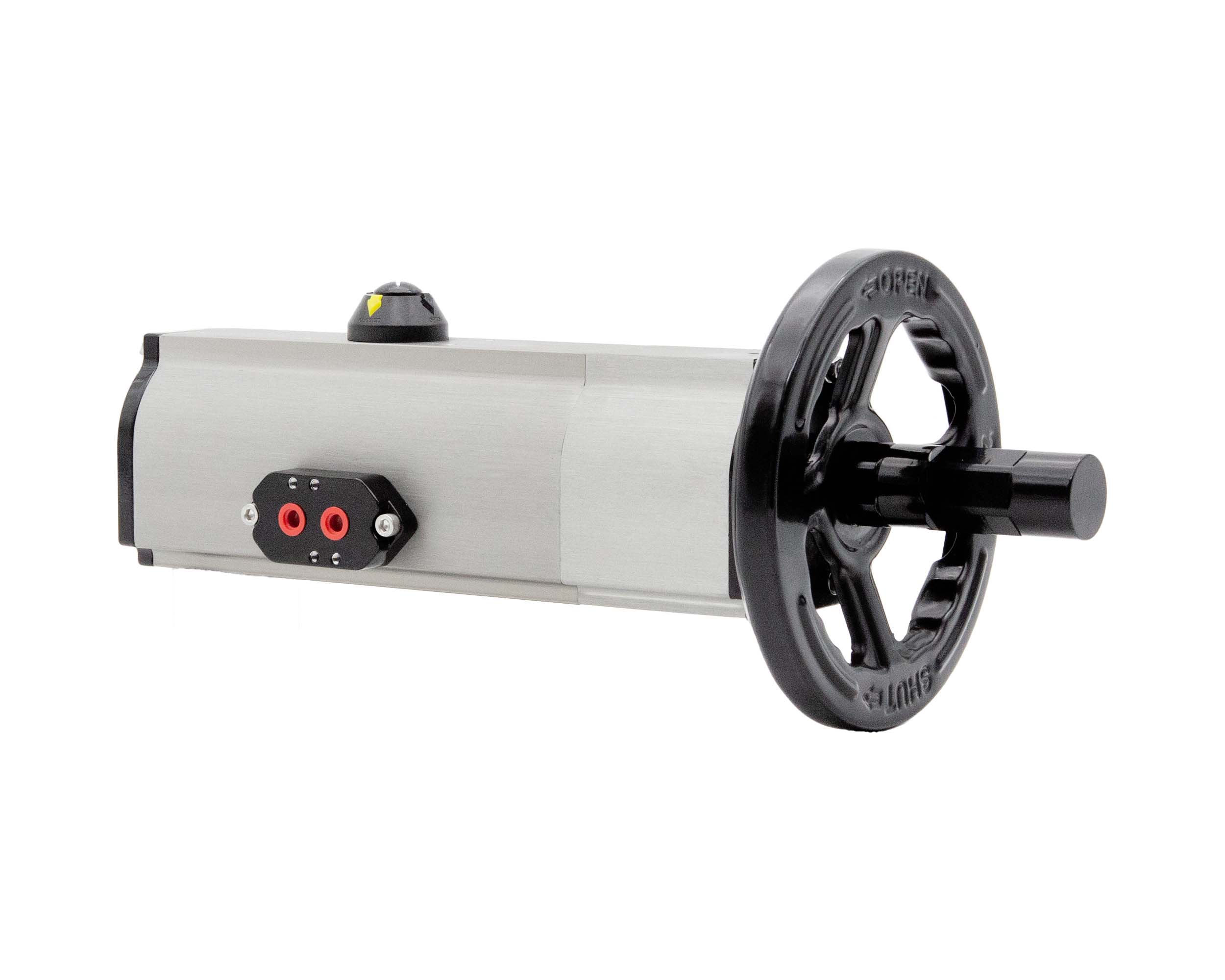








Understanding the Pneumatic Scotch Yoke Actuator
 Oct 21, 2024|
 View:1764
Pneumatic actuators are essential components in numerous industrial applications, providing reliable and efficient means of converting compressed air into mechanical motion. Among the various types of pneumatic actuators, the Scotch yoke actuator stands out due to its unique design and operational capabilities. This article delves into the intricacies of pneumatic Scotch yoke actuators, their working principles, advantages, applications, maintenance, and future prospects.
1. What is a Pneumatic Scotch Yoke Actuator?
A pneumatic Scotch yoke actuator is a type of linear actuator that converts the rotational motion of a pneumatic motor into linear motion through the use of a yoke mechanism. The actuator consists of a yoke that is connected to a piston. As the pneumatic motor rotates, the yoke moves in a manner that translates the rotational motion into linear motion, allowing the actuator to perform tasks such as opening or closing valves.
1.1 Design Features
The design of a Scotch yoke actuator typically includes:
Yoke Mechanism: A key component that converts rotation to linear motion.
Pneumatic Cylinder: Houses the piston that generates the linear force.
Mounting Bracket: Provides a stable base for installation.
Seals and Bearings: Ensure smooth operation and prevent air leakage.
2. Working Principle
The operation of a pneumatic Scotch yoke actuator can be summarized in a few steps:
Compressed Air Supply: Compressed air is supplied to the actuator.
Piston Movement: The pneumatic pressure drives the piston within the cylinder.
Yoke Rotation: As the piston moves, it pushes the yoke, which is connected to a crank pin that rotates.
Linear Motion: The rotation of the yoke translates into linear motion, enabling the actuator to perform its intended function.
This mechanism allows for a high degree of efficiency and speed, making it suitable for various applications.
3. Advantages of Pneumatic Scotch Yoke Actuators
Pneumatic Scotch yoke actuators offer several advantages, including:
3.1 High Efficiency
The Scotch yoke mechanism is designed to maximize the conversion of rotational to linear motion, resulting in minimal energy loss. This high efficiency is particularly beneficial in applications requiring rapid actuation.
3.2 Compact Design
The actuator's design is relatively compact compared to other types of actuators, making it suitable for installations where space is limited. Its small footprint allows for easier integration into existing systems.
3.3 Robustness and Durability
Pneumatic actuators are built to withstand harsh industrial environments. The materials used in their construction are often resistant to corrosion and wear, ensuring a long operational lifespan.
3.4 Fast Response Times
Pneumatic systems generally offer quick response times, which is crucial in applications that require immediate action. The dynamic performance of Scotch yoke actuators is particularly beneficial in process control.
3.5 Versatility
These actuators can be used in a variety of applications, including valve control, material handling, and automation systems, making them highly versatile in industrial settings.

4. Applications
Pneumatic Scotch yoke actuators find applications in various industries, including:
4.1 Oil and Gas
In the oil and gas industry, these actuators are often used to control valves in pipelines, ensuring the safe and efficient transport of fluids.
4.2 Water and Wastewater Treatment
Scotch yoke actuators are employed in water treatment plants for valve control, aiding in the regulation of flow and pressure in treatment processes.
4.3 Manufacturing
In manufacturing settings, these actuators are used for material handling and assembly line automation, enhancing productivity and efficiency.
4.4 Food and Beverage
The food and beverage industry utilizes pneumatic actuators for processes such as bottling and packaging, where speed and precision are critical.
4.5 Pharmaceuticals
In pharmaceutical manufacturing, the precise control offered by pneumatic actuators is essential for maintaining quality and compliance with regulatory standards.
5. Maintenance and Troubleshooting
To ensure optimal performance and longevity of pneumatic Scotch yoke actuators, regular maintenance is necessary. Here are some key maintenance practices:
5.1 Routine Inspections
Regular inspections should be conducted to check for signs of wear, leaks, or other issues. This proactive approach can prevent costly downtime.
5.2 Lubrication
Proper lubrication of moving parts is essential for smooth operation. Ensure that all bearings and seals are adequately lubricated to reduce friction and wear.
5.3 Replace Worn Parts
Any worn or damaged components should be replaced promptly. This includes seals, bearings, and the yoke mechanism itself.
5.4 Air Supply Checks
Regularly inspect the compressed air supply for consistency and pressure levels. Inadequate air supply can lead to poor actuator performance.
5.5 Troubleshooting Common Issues
Some common issues that may arise include:
Slow Operation: This may be due to insufficient air supply or blockages in the pneumatic lines.
Leaking Seals: Inspect seals for wear and replace them if necessary.
Unresponsive Actuator: Check for air supply issues or mechanical blockages.
6. Future Trends
The future of pneumatic Scotch yoke actuators looks promising, with several trends shaping their development:
6.1 Integration with IoT
The integration of pneumatic actuators with the Internet of Things (IoT) is expected to enhance their functionality. IoT-enabled actuators can provide real-time data on performance, enabling predictive maintenance and improved operational efficiency.
6.2 Advanced Materials
The use of advanced materials in actuator construction will likely enhance durability and performance. Lightweight composites and corrosion-resistant alloys can contribute to longer lifespans and reduced maintenance needs.
6.3 Automation and AI
As industries continue to adopt automation and artificial intelligence, pneumatic Scotch yoke actuators will play a critical role in automated systems. Their ability to provide precise control will be vital in next-generation manufacturing processes.
6.4 Sustainability Initiatives
In response to growing environmental concerns, there will be a push for more sustainable practices in actuator design and operation. This includes energy-efficient designs and the use of environmentally friendly materials.
Pneumatic Scotch yoke actuators are a vital technology in modern industrial applications, offering efficiency, speed, and versatility. Understanding their design, operation, and maintenance is essential for maximizing their benefits. As technology continues to evolve, these actuators are set to play an increasingly significant role in automation and process control across various industries. Their adaptability to future trends ensures that they will remain a crucial component in the industrial landscape for years to come.