








What are the three types of pneumatic actuators?
 Dec 06, 2024|
 View:1690
Pneumatic actuators are essential devices used in industrial applications for controlling and automating processes. They convert compressed air into mechanical motion, allowing for precise control in various systems. As a pneumatic actuator factory in china, there are three primary types of pneumatic actuators: linear actuators, rotary actuators, and diaphragm actuators. Each type has its unique characteristics, applications, and advantages. This article will explore these three types, their mechanisms, applications, and how they fit into modern automation systems.
1. Linear Pneumatic Actuators
1.1 Definition and Function
Linear pneumatic actuators convert the energy of compressed air into linear motion. This type of actuator moves in a straight line, enabling the actuation of valves, gates, and various mechanical components. The movement can be either single-acting or double-acting.
1.2 Mechanism
Single-Acting Actuators: These single acting pneumatic actuators utilize compressed air to move the piston in one direction only. A spring or another mechanism returns the piston to its original position when the air pressure is released. Single-acting actuators are simpler and often used in applications where the return motion can be achieved through a spring mechanism.
Double-Acting Actuators: These double acting pneumatic actuators use compressed air to move the piston in both directions. Air pressure is applied to one side of the piston to extend it and switched to the other side to retract it. Double-acting actuators provide more control and force, making them suitable for applications requiring precise positioning and higher loads.
1.3 Applications
Linear pneumatic actuators are widely used in various industries, including:
Manufacturing: For automation in assembly lines, packaging machines, and conveyor systems.
Material Handling: To control the movement of gates, doors, and hoppers.
Valves: To open and close valves in fluid control systems.
1.4 Advantages
Simplicity: Linear actuators are straightforward in design and operation, making them easy to install and maintain.
Speed: They can operate quickly, providing rapid actuation for processes requiring fast response times.
Force: Linear actuators can generate significant force, making them suitable for heavy-duty applications.
1.5 Limitations
Limited Stroke Length: The stroke length may be limited compared to other actuator types.
Air Supply Dependence: They rely on a consistent and clean air supply, which can be a limiting factor in some environments.
2. Rotary Pneumatic Actuators
2.1 Definition and Function
Rotary pneumatic actuators convert compressed air into rotational motion. They are used to turn valves, dampers, and other components that require a circular motion. These actuators can be classified into two main types: vane actuators and rack-and-pinion actuators.
2.2 Mechanism
Vane Actuators: These consist of a rotor mounted on a shaft with vanes that divide the rotor into chambers. Compressed air enters the chambers, causing the rotor to rotate. The angle of rotation can be controlled by adjusting the air pressure and the design of the actuator.
Rack-and-Pinion Actuators: This design uses a circular gear (the pinion) that is driven by a linear gear (the rack). When compressed air is applied, it moves the rack, which in turn rotates the pinion. This type allows for precise control of the angle of rotation.
2.3 Applications
Rotary pneumatic actuators are commonly used in:
Valve Control: For regulating flow in pipelines, especially in industries like oil and gas, water treatment, and chemical processing.
Dampers: In HVAC systems to control airflow and temperature.
Robotics: For controlling the motion of robotic arms and automated machinery.
2.4 Advantages
Compact Design: Rotary actuators generally have a smaller footprint compared to linear actuators, making them suitable for space-constrained environments.
High Torque: They can provide significant torque, which is essential for turning heavy valves and equipment.
Versatility: Rotary actuators can be designed for various angles of rotation, allowing for flexibility in applications.
2.5 Limitations
Complexity: The design and control of rotary actuators can be more complex than linear actuators.
Backlash: Some designs may experience backlash, which can affect precision in applications requiring high accuracy.

3. Diaphragm Pneumatic Actuators
3.1 Definition and Function
Diaphragm pneumatic actuators use a flexible diaphragm to convert air pressure into motion. They are primarily used for controlling valves and are particularly effective in applications where a fail-safe mechanism is essential.
3.2 Mechanism
The actuator consists of a diaphragm that separates two chambers. Compressed air is introduced into one chamber, causing the diaphragm to flex and move a connected rod or valve stem. The movement can be adjusted by controlling the air pressure applied to the diaphragm.
3.3 Applications
Diaphragm actuators are commonly found in:
Control Valves: For precise regulation of fluid flow in various processes, including water treatment and chemical processing.
Safety Systems: In applications requiring fail-safe operations, such as emergency shutdown systems.
Pharmaceuticals: For applications that require high hygiene standards, as diaphragm actuators can be designed to minimize contamination risks.
3.4 Advantages
Simplicity: Diaphragm actuators have fewer moving parts, leading to easier maintenance and lower failure rates.
Compact Size: Their compact design makes them suitable for various applications, especially where space is limited.
Fail-Safe Operation: They can be designed to return to a default position in the event of a power failure or loss of air supply.
3.5 Limitations
Limited Force Output: Diaphragm actuators may not generate as much force as linear or rotary actuators in some applications.
Sensitivity to Pressure: Performance can be affected by fluctuations in air pressure, requiring careful monitoring and control.
As china pneumatic actuator manufacturer, Our product range typically includes double-acting and spring-return (fail-safe) configurations, often customizable with various options like accessories, mounting kits, and materials to meet specific project requirements. With a focus on quality control and competitive pricing, the KANEDE factory serves both domestic and international markets, providing actuators for industries such as oil and gas, power generation, water treatment, and general industrial automation.
Pneumatic actuators play a vital role in modern automation, offering efficient and reliable control in various industrial applications. The three main types—linear, rotary, and diaphragm actuators—each have their unique mechanisms, advantages, and limitations. Understanding these differences is crucial for selecting the appropriate actuator for a specific application.
In summary, linear actuators provide straightforward linear motion, rotary actuators offer rotational control, and diaphragm actuators excel in applications requiring fail-safe mechanisms. By selecting the right type of pneumatic actuator, industries can enhance their process efficiency, improve safety, and achieve precise control across a wide range of operations.
Recommended Products

EXC10-12 Intelligent Part turn electric actuator
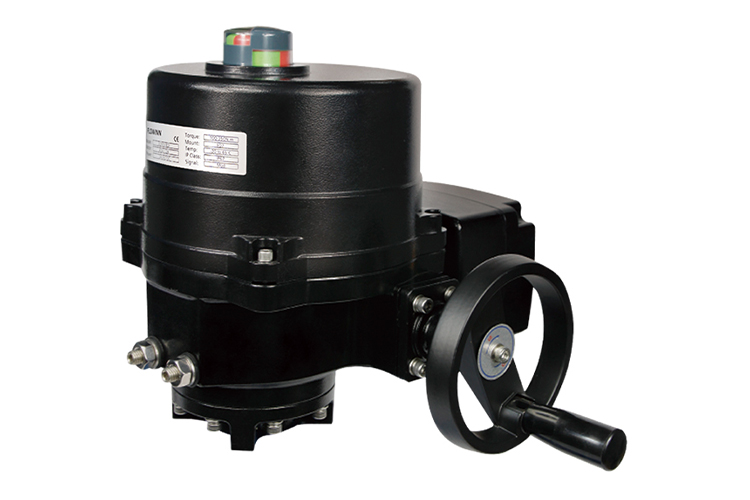
EFM-EOM-Battery backup fail safe electric actuator for Marine

EOM2-9-Intelligent quarter turn electric actuator with LCD display and local control

Double acting scotch yoke pneumatic actuator for valves-Low Temperature

Aluminium scotch yoke spring return pneumatic actuator-High Temperature


Recent News
1.Take you through the pneumatic actuators
2023-03-082.The difference between double acting pneumatic actuators and single acting pneumatic actuators
2023-03-143.Why use Scotch yoke pneumatic actuator for large diameter pneumatic butterfly valve
2023-03-224.Integrating Spring return pneumatic actuators into your industrial operations
2023-04-26