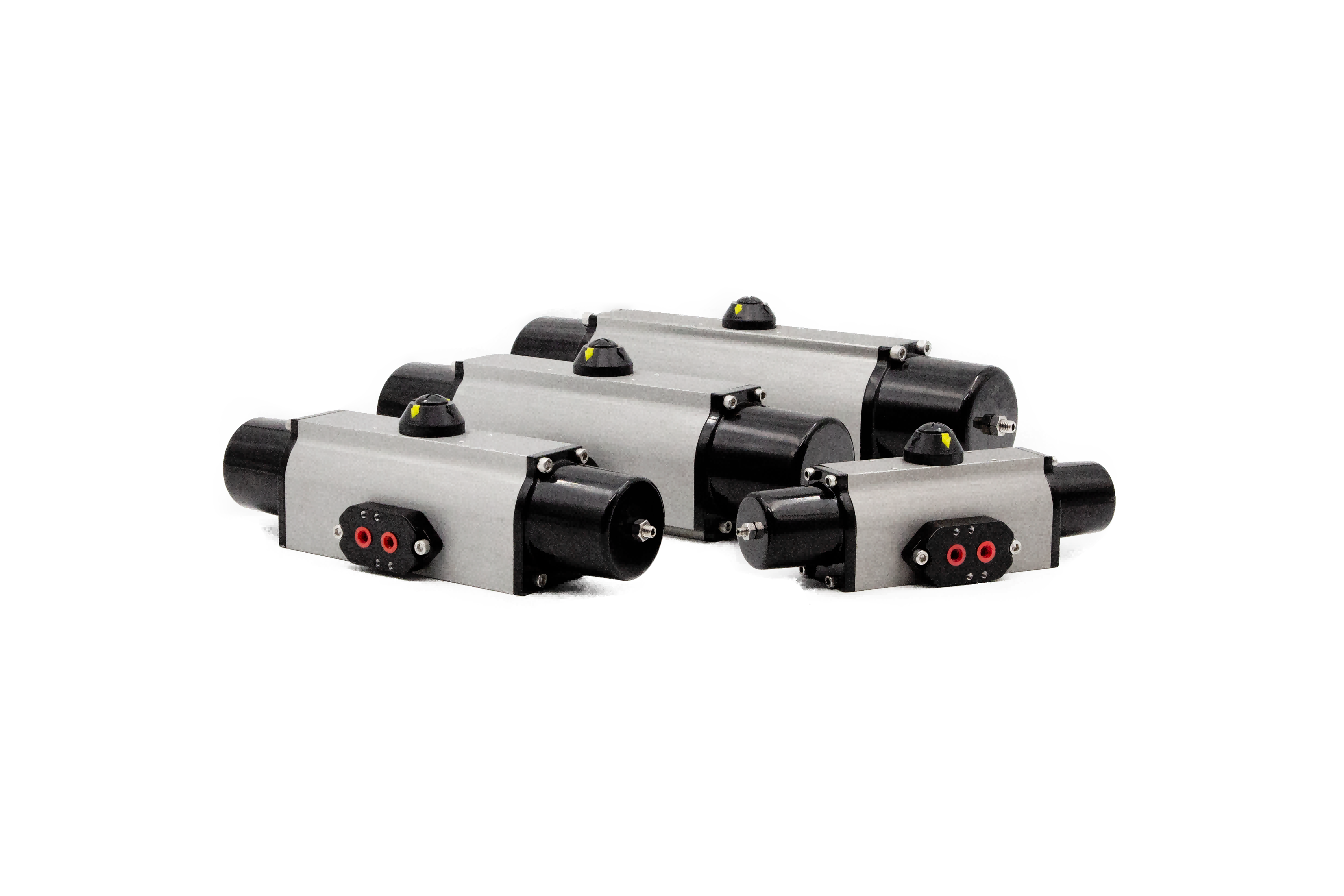
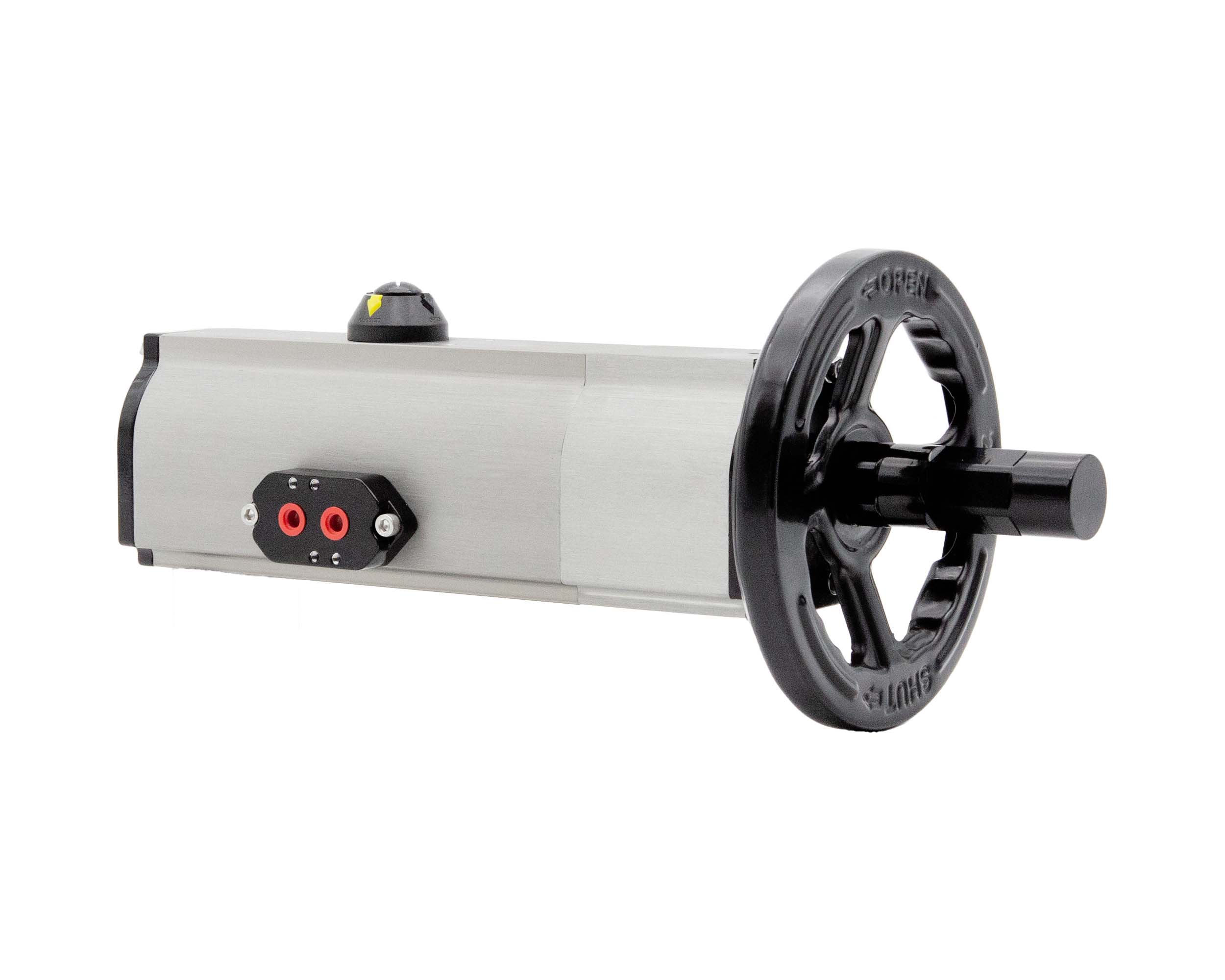
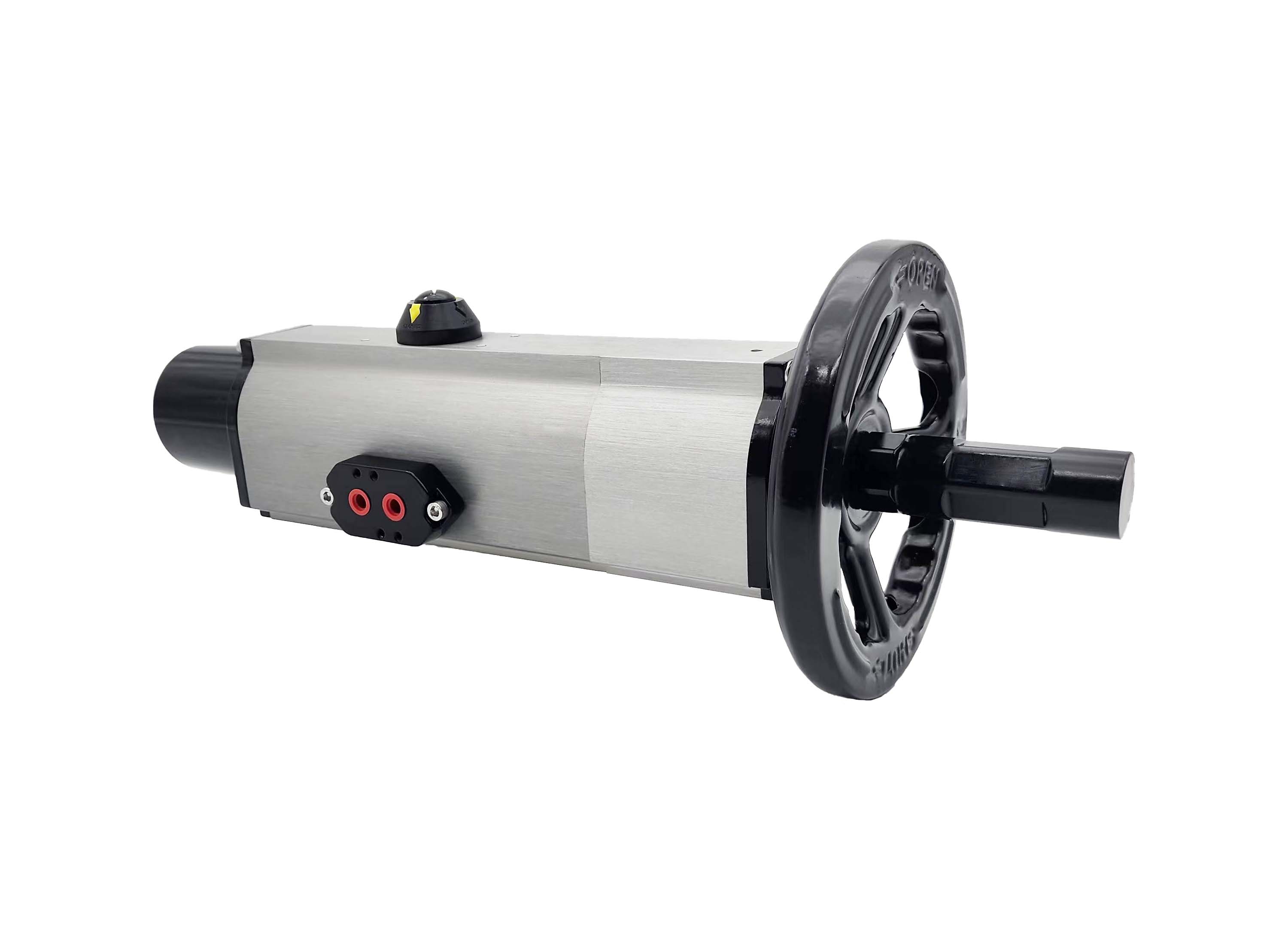
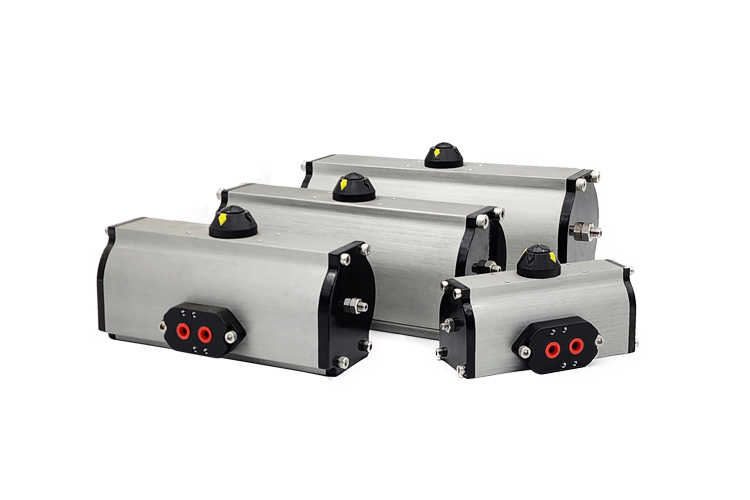
Key Components
Pneumatic Chamber – Where compressed air acts on a piston or diaphragm.
Spring Mechanism – Provides the return force when air pressure is released.
Stem or Shaft – Transmits motion to the valve or damper.
Housing – Protects internal components from environmental factors.
Why Choose Spring Return pneumatic actuator for High-Temperature Applications?
Fail-Safe Reliability: Ensures safety in critical processes (e.g., emergency shutdowns).
No Electrical Components: Eliminates spark risks in explosive environments.
Robust Performance: Works efficiently even under extreme heat.
Common High Temperature Industrial Environments
Oil Refineries & Petrochemical Plants (200°C – 600°C)
Power Generation (Steam Valves & Boilers) (150°C – 500°C)
Furnaces & Kilns in Manufacturing (300°C – 1000°C)
Aerospace & Automotive Testing (Extreme thermal cycling)
How Spring Return Pneumatic Actuators Handle High Temperatures
To ensure durability in high-temperature conditions, these spring return pneumatic actuators incorporate:
A. Heat-Resistant Materials
Stainless Steel Housing (Grade 316 or 304) – Resists corrosion and thermal expansion.
High-Temperature Seals – Maintain integrity under extreme heat.
Ceramic Coatings – Used in ultra-high-temperature applications (e.g., furnace controls).
B. Thermal Insulation & Cooling Mechanisms
Heat Shields & Thermal Barriers – Protect internal components.
Air Cooling Jackets – Circulate cool air around the spring return pneumatic actuator.
Extended Stem Designs – Keep the actuator body away from direct heat sources.
C. Spring Design Considerations
High-Temperature Alloy Springs (Inconel, Hastelloy) – Prevent loss of elasticity.
Applications in High-Temperature Industries
A. Oil & Gas Industry
Wellhead Control Valves – Emergency shut-off in case of fire.
Flare Stack Systems – Reliable operation in extreme heat.
Refinery Process Valves – Handling hot crude oil & gas.
B. Power Plants (Thermal & Nuclear)
Steam Turbine Bypass Valves – Fast response in high-pressure steam lines.
Boiler Feedwater Control – Ensures safety during overheating.
C. Chemical & Petrochemical Processing
Reactor Cooling Valves – Prevents runaway reactions.
High-Temperature Pipeline Isolation – Safe shutdown in leaks.
D. Steel & Glass Manufacturing
Furnace Damper Control – Regulates extreme heat flow.
Molten Metal Handling – Precision in casting processes.
E. Aerospace & Automotive Testing
Exhaust Gas Simulation – Reliable actuation in test rigs.
Thermal Vacuum Chambers – Valve control in extreme conditions.
Spring return Pneumatic Actuator Specification:
Comply to UNI EN 15714-3:2009 standard
ISO connection standard:UNI EN ISO 5211。
Auxiliary connectioin:NAMUR,VDI/VDE3845
Control angle:90°(-5°~+3°)。
Torque:Relative to control pressure and type.
Spring return Pneumatic Actuator Working Condition:
Operation temperature:-20℃~+120℃
Pressure:2-8bar
Operating Medium:Filtered compressed air dry or lubricated.The pressure condensation point in accordance with
(ISO 8573-1:2010, Class 3)has to be ≤ - 20℃ or 10℃under ambient temperature.
The maximum particle size in accordance with (ISO 8573-1:2010, Class 5) should not exceed 40 µm.
Spring return Pneumatic Actuator Benefits:
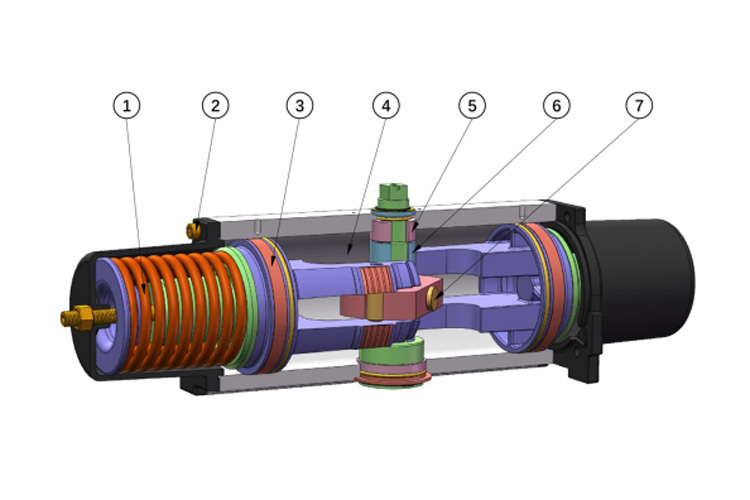
1. Modular spring pack According to different air pressure with different spring combination, low stress spring design can effectively extend the service life of the spring.
2.Corrosion-resistant connectors All connection bolts are stainless steel with good corrosion resistance
3.Piston ring The piston guide ring, made of ultra high molecular polymer, has an extremely low coefficient of friction, while the material has high hardness and excellent wear resistance, providing precise guidance and long service life.
4.Body The cylinder body is processed with high precision and anodized. The thickness of the oxide layer is more than 20μm. It has low friction coefficient and excellent anti-corrosion and wear resistance.
5.Shaft bearing Prevent direct contact between shaft and cylinder body, ensure the positioning accuracy of drive shaft, reduce friction loss, make the actuator efficient operation.
6. Piston bearing Ensure the positioning accuracy of the piston, so that the piston can be smooth and smooth operation, prevent shifting. 7. Pin connection
The fork and the drive shaft are connected by pins to ensure that the fork and the drive shaft run synchronously. At the same time, the pins also play a role in preventing the drive shaft from flying out, which is a reliable and safe design.
|
Part Number and Material:
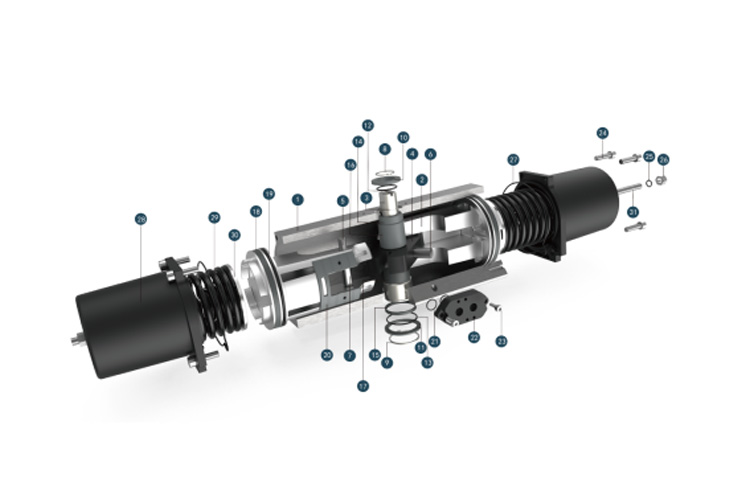
Schedule:
Pos | Description | Material |
1 | Cylinder 1 | Aluminium Alloy |
2 | Piston | Aluminium Alloy |
3 | Shaft | Alloy Steel |
4 | Yoke | Alloy Steel |
5 | Piston pin | Alloy Steel |
6 | Yoke pin | Alloy Steel |
7 | Bearing | Alloy Steel |
8 | Upper circlip | Stainless Steel |
9 | Lower circlip | Stainless Steel |
10 | Upper washer | Crystalline Polymer |
11 | Lower washer | Crystalline Polymer |
12 | Upper shaft O-ring | FKM |
13 | Lower shaft O-ring | FKM |
14 | Upper shaft bearing | Crystalline Polymer/Graphite Copper Bushing |
15 | Lower shaft bearing | Crystalline Polymer/Graphite Copper Bushing |
16 | Upper piston bearing | Crystalline Polymer |
17 | Lower piston bearing | Crystalline Polymer |
18 | Piston ring | Crystalline Polymer |
19 | Piston O-ring | FKM |
20 | Piston support chip | Crystalline Polymer |
21 | Connection plate O-ring 2 | FKM |
22 | Connection plate 2 | Aluminium Alloy |
23 | Plate socket screw 2 | Stainless Steel |
24 | Cover socket screw | Stainless Steel |
25 | Nut O-ring | FKM |
26 | screws | Stainless Steel |
27 | End Cover Seal Ring | FKM |
28 | Cover | Aluminium Alloy |
29 | Spring | Spring Steels |
30 | Lower Spring Washer | Aluminium Alloy |
31 | Spring Shaft | Stainless Steel |
Note: 1)180-260 body is split type.
2)140-260 not included.
Above illustration for internal structure demonstration only,not for all models and parts.