








Spring return vs double acting pneumatic actuator
 Jul 22, 2025|
 View:1716
In the world of industrial automation and valve control, actuators play a pivotal role in converting energy into mechanical motion. Among the various types available, spring return and double acting actuators represent two fundamentally different approaches to valve operation.
What is an Actuator?
An actuator is a mechanical device that converts various forms of energy (pneumatic, hydraulic, or electric) into controlled motion, typically linear or rotary. In industrial applications, actuators are most commonly used to operate valves—controlling the flow of liquids, gases, or other media in piping systems.
The Role of Actuators in Process Control
Actuators serve as the "muscle" in automated systems, executing commands from control systems to open, close, or modulate valves. Their reliability and performance directly impact system safety, efficiency, and operational costs.

Spring Return Pneumatic Actuators: Design and Operation
Working Principle
Spring return pneumatic actuators, also known as single-acting actuators, operate using a single pressure chamber and an internal spring mechanism. When pressurized air or fluid enters the chamber, it compresses the spring and moves the actuator to its active position (either open or closed). When pressure is released, the stored energy in the spring returns the actuator to its default position.
Key Components
Piston or Diaphragm: Converts fluid pressure into mechanical force
Compression Spring: Provides the return force
Housing: Contains the operating mechanism
Stem: Transfers motion to the valve
Typical Configurations
Normally Closed (NC): Spring holds valve closed, air pressure opens it
Normally Open (NO): Spring holds valve open, air pressure closes it
Double Acting Pneumatic Actuators: Design and Operation
Working Principle
Double acting pneumatic actuators feature two pressure chambers (ports) that work in opposition. Pressurized fluid entering one chamber moves the actuator in one direction, while pressure applied to the opposite chamber moves it in the reverse direction. These double acting pneumatic actuators require pressure to be maintained in one chamber to hold position, as they lack a spring return mechanism.
Key Components
Two Pressure Chambers: For bidirectional operation
Piston or Diaphragm: In both chambers
Housing: Contains the dual-chamber mechanism
Stem: Transfers motion to the valve
Typical Configurations
Balanced pressure design for equal force in both directions
Optional positioners for precise modulation

Comparative Analysis: Spring Return vs. Double Acting
1. Fail-Safe Characteristics
Spring Return:
Inherent fail-safe operation
Returns to predetermined position upon power/pressure loss
Ideal for safety-critical applications
Double Acting:
No automatic fail-safe position
Requires additional systems (like air reservoirs) for fail-safe operation
Stays in last position during failure (unless equipped with accessories)
2. Air Consumption
Spring Return:
Lower air consumption (only requires air for one direction)
More energy efficient for on/off applications
Reduced operating costs in many applications
Double Acting:
Higher air consumption (requires air for both directions)
Continuous air pressure needed to maintain position
Better suited for modulating control where position changes frequently
3. Force Output
Spring Return:
Asymmetric force output (spring force subtracts from air force in one direction)
Limited by spring size and compression ratio
May require larger size for same torque as double acting
Double Acting:
Symmetrical force output in both directions
Can provide full rated force in both directions
Generally more compact for same torque output
4. Speed of Operation
Spring Return:
Typically slower in spring return direction
Speed depends on spring characteristics and air exhaust rate
May require flow controls for smooth operation
Double Acting:
Can be equally fast in both directions
Speed easily adjustable with flow controls
Better for rapid cycling applications
5. Maintenance Requirements
Spring Return:
Springs may fatigue over time
Requires periodic spring inspection
Generally simpler mechanism with fewer parts
Double Acting:
No springs to fatigue
More complex with additional seals and parts
Requires maintenance of both pressure chambers
6. Cost Considerations
Spring Return:
Lower initial cost for small sizes
Higher cost for large torque requirements
Potential long-term savings from reduced air consumption
Double Acting:
More cost-effective for larger sizes
Additional costs for fail-safe systems if needed
Higher operating costs due to increased air consumption

Application Specific Considerations
When to Choose Spring Return Pneumatic Actuators
Safety-Critical Systems: Where fail-safe operation is mandatory
Energy Conservation: Applications where air supply is limited or costly
Simple On/Off Operation: Systems requiring infrequent valve operation
Emergency Shutdown Systems: Where positive closure/open is required during failure
When to Choose Double Acting Pneumatic Actuators
Modulating Control: Applications requiring precise positioning
High-Cycle Operations: Systems with frequent valve movements
Large Valve Operation: Where high torque is required in both directions
Balanced Force Requirements: Applications needing equal force for open/close
The choice between spring return and double acting pneumatic actuators depends on a careful evaluation of application requirements, safety considerations, operating costs, and performance needs. Spring return pneumatic actuators offer inherent safety and energy efficiency advantages for on/off applications, while double acting pneumatic actuators provide superior control and symmetrical performance for modulating or high-cycle applications.
China pneumatic actuator manufacturer produces high quality solutions for pneumatic and electric valve automation. With 20000 M² factory base located in Changzhou city in Jiangsu province China, we manufacture and provide our customers with reliable valve actuators.
Our products have been widely applied in petrochemical, natural gas, steel metallurgy, air separation, mechanical equipment, water plants and other industry applications.
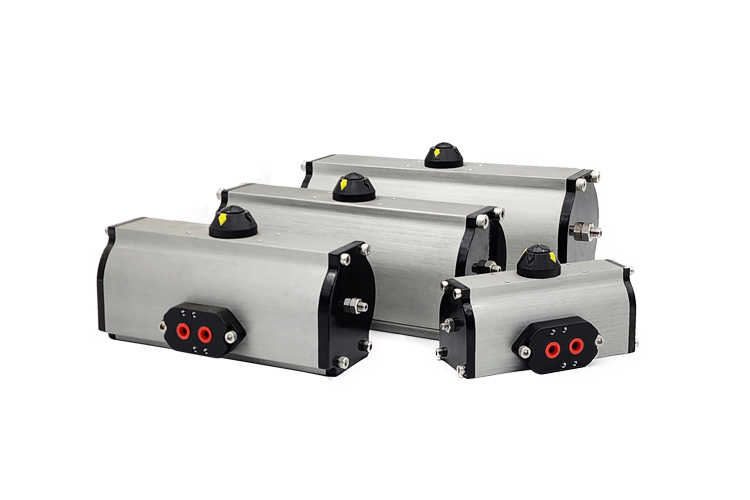
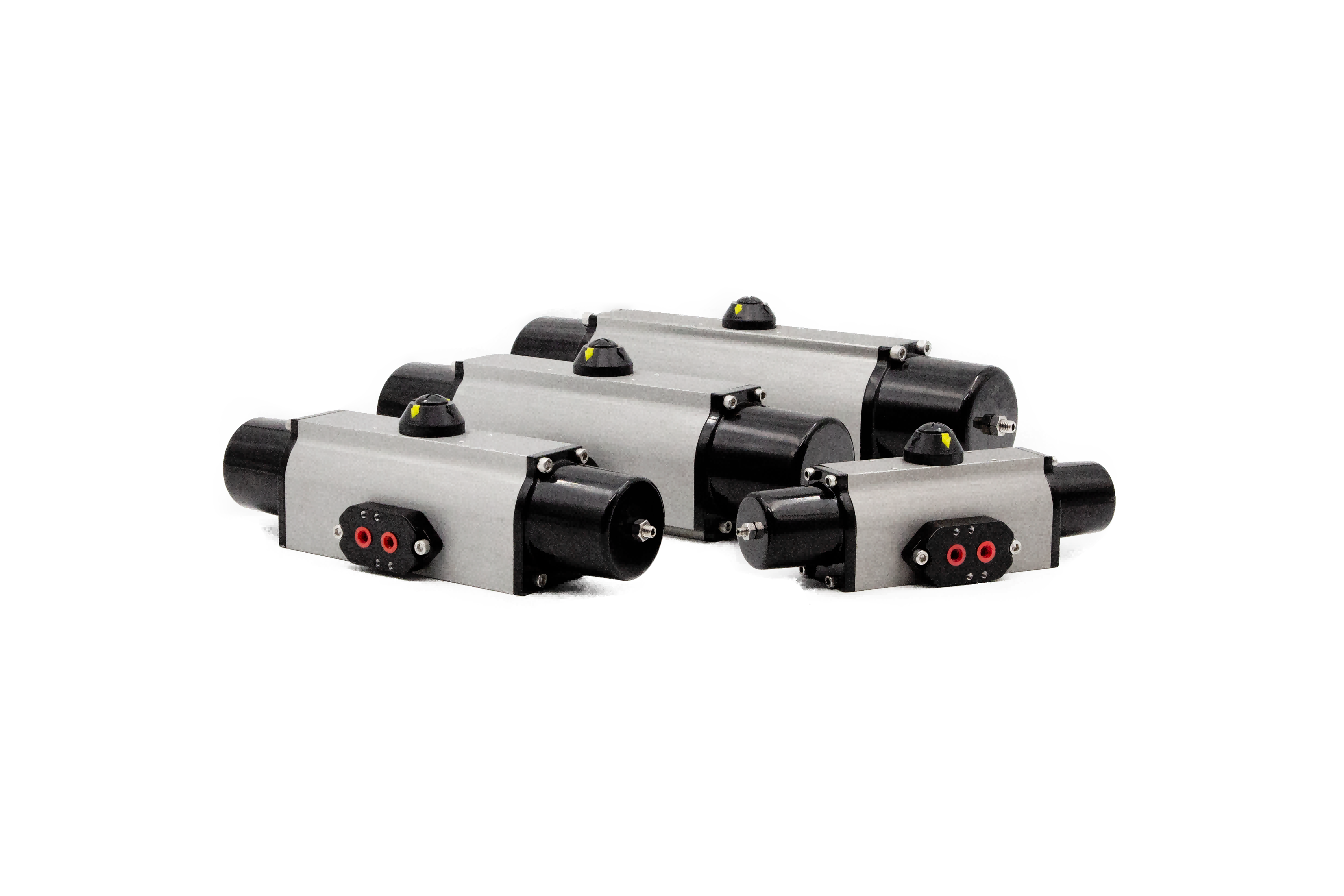
Our specialty product including double acting pneumatic actuators and single acting pneumatic actuators with cylinder bores ranging from 40mm to 220mm and torque ranges from 22Nm to 4250Nm (5bar). For high durability pneumatic cylinders or total actuation packages, china pneumatic actuator manufacturer-KANEDE can offer the most cost-effective product and services for a one stop solution to our customers.



Recent News
1.Integrating Spring return pneumatic actuators into your industrial operations
2023-04-262.Top 10 Spring Return Pneumatic Actuator Manufacturers in 2025
2025-07-043.Advantages and Applications of Double Acting Pneumatic Actuators
2023-06-214.What are the key features of a double acting pneumatic actuator?
2023-07-055.The difference between double acting pneumatic actuators and single acting pneumatic actuators
2023-03-14