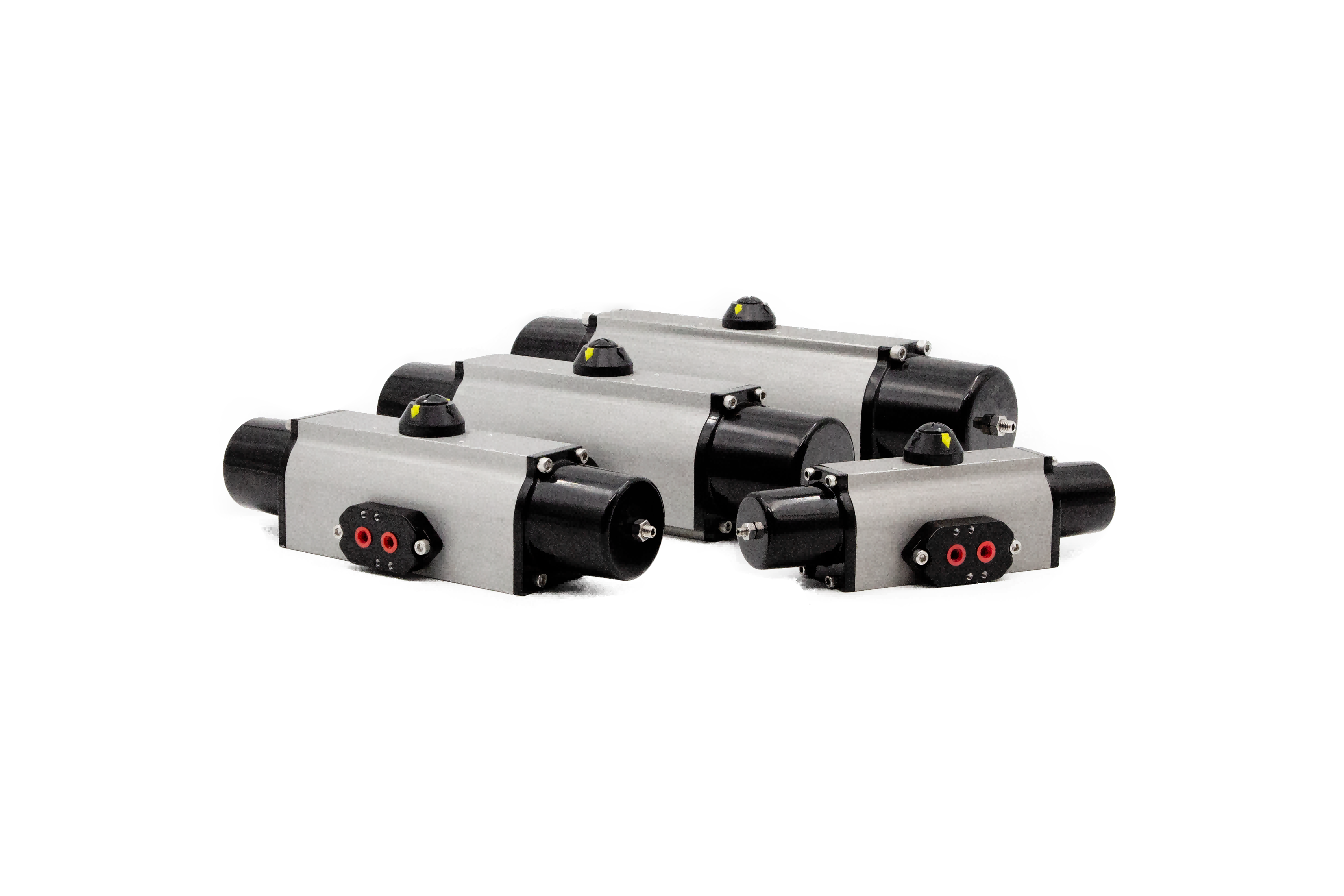








How to select a pneumatic actuator for valves?
 Jul 14, 2025|
 View:1498
Pneumatic actuators are essential components in industrial valve automation, providing reliable and efficient operation for various process control applications. Selecting the right pneumatic actuator for your valve system requires careful consideration of multiple factors to ensure optimal performance, safety, and cost-effectiveness. This comprehensive guide will walk you through the key aspects of pneumatic actuator selection.
Understanding Pneumatic Actuators
Pneumatic actuators convert compressed air energy into mechanical motion to operate valves. They come in two main types:
Linear Actuators: Produce straight-line motion (typically used with globe valves, gate valves)
Rotary Actuators: Produce rotational motion (typically used with ball valves, butterfly valves, plug valves)
Key Selection Criteria
1. Valve Type and Size
The first consideration must be the type and size of valve you need to automate:
Valve Type: Different valves require different actuation methods:
Quarter-turn valves (ball, butterfly, plug) need rotary actuators
Multi-turn valves (gate, globe) need linear or multi-turn rotary actuators
Diaphragm valves typically use linear actuators
Valve Size: The actuator must generate sufficient torque/thrust for the valve size:
Larger valves require more torque/thrust
Consider both breakaway (starting) torque and running torque
2. Operating Conditions
Evaluate the environmental and process conditions:
Pressure Requirements:
Maximum operating pressure
Pressure differential across the valve
Available air supply pressure (typically 4-7 bar/60-100 psi)
Temperature Range:
Standard actuators work in -20°C to 80°C (-4°F to 176°F) range
High-temperature applications may require special seals and materials
Corrosive Environments:
Choose appropriate materials (stainless steel, aluminum with coatings)
Consider IP ratings for dust/water protection
3. Actuator Type Selection
Rotary Actuators:
Rack-and-pinion: Most common, compact design, good for quarter-turn valves
Scotch yoke: Higher torque output, used for larger valves
Vane type: Limited rotation (typically <100°), used in specific applications
Linear Actuators:
Spring-return: Single-acting with spring return
Double-acting: Air pressure moves piston in both directions
Diaphragm type: Used for precise control applications
4. Torque/Thrust Requirements
Accurate torque/thrust calculation is critical:
Breakaway torque: Force needed to initially move the valve from closed position
Running torque: Force needed to keep the valve moving
Seating torque: Additional force needed for tight shut-off (especially in high-pressure applications)
Use valve manufacturer's torque specifications or calculate using:
Wear over time
Temperature variations
Potential fouling or corrosion
5. Actuation Speed and Duty Cycle
Consider the required operating speed:
Standard actuators operate at 3-10 seconds per 90° rotation
Need faster operation? Consider:
Larger air supply lines
Quick exhaust valves
Higher air pressure (if valve permits)
For high-frequency applications (>1000 cycles/year):
Select durable construction
Consider bearing types (metal vs. composite)
Evaluate seal materials

6. Fail-Safe Requirements
Determine the fail-safe position needed for safety and process requirements:
Spring-return actuators: Automatically return to safe position on air failure
Fail-open (normally open)
Fail-closed (normally closed)
Double-acting actuators: Remain in last position on air failure
May require air reservoir or backup system for critical applications
7. Accessories and Options
Consider additional features that may be required:
Positioners: For precise control (3-15 psi, 4-20 mA, or digital signals)
Limit switches: For position feedback
Solenoid valves: For remote operation
Manual override: For maintenance or emergency operation
Air preparation units: Filters, regulators, lubricators
Volume boosters: For faster operation of large actuators
8. Standards and Certifications
Ensure compliance with relevant industry standards:
ISO 5211 (mounting interface standard)
ATEX/IECEx for hazardous areas
SIL ratings for safety-critical applications
NACE MR0175 for sour service
PED for pressure equipment
9. Maintenance Considerations
Evaluate long-term maintenance requirements:
Seal replacement frequency
Lubrication needs (oil-free vs. lubricated)
Accessibility for maintenance
Availability of spare parts
10. Cost Analysis
Consider total cost of ownership:
Initial purchase price
Installation costs
Energy consumption (air usage)
Maintenance costs
Expected service life
Selection Process Step-by-Step
Define valve requirements: Type, size, torque/thrust needs
Determine operating conditions: Pressure, temperature, environment
Calculate torque/thrust: With appropriate safety factor
Select actuator type: Rotary or linear, specific design
Choose fail-safe mode: Spring-return or double-acting
Add necessary accessories: Positioners, limit switches, etc.
Verify standards compliance: For your industry/application
Evaluate vendors: Reputation, support, lead times
Review maintenance requirements
Finalize selection: Based on technical and commercial factors
Common Mistakes to Avoid
Underestimating torque requirements
Ignoring breakaway torque
Overlooking environmental conditions
Selecting undersized air supply system
Not considering future maintenance needs
Choosing based solely on initial cost
Ignoring interface standards (ISO 5211)
Not accounting for potential process changes
Selecting the right pneumatic actuator for valve automation requires careful analysis of technical requirements, operating conditions, and long-term performance needs. By systematically evaluating all factors discussed in this guide—from torque calculations to environmental considerations—you can ensure reliable, efficient, and safe operation of your automated valve systems. Always consult with valve and actuator manufacturers when in doubt, as they can provide valuable application-specific recommendations.