







Best Spring Return Pneumatic Actuators: A Comprehensive Guide
 Nov 18, 2025|
 View:1216
Spring return pneumatic actuators are critical components in industrial automation, providing reliable fail-safe operation for valves and other process control equipment. These devices use compressed air to drive movement while employing a spring mechanism to return to a default position upon air supply failure. This article explores the key features, applications, and selection criteria for the best spring return pneumatic actuators available in today's market.
How Spring Return Pneumatic Actuators Work
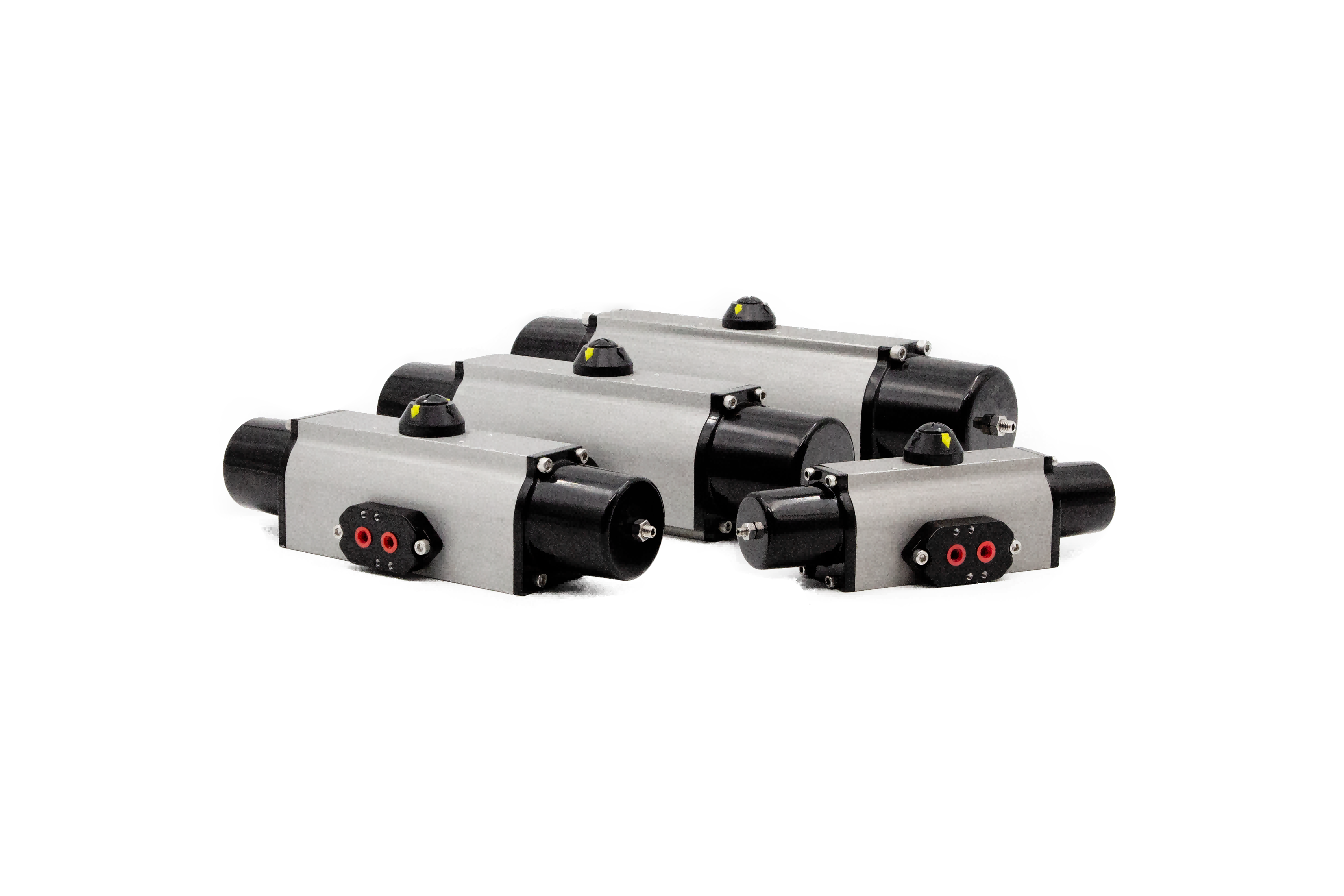
Spring return actuators (also known as single-acting actuators) operate on a simple but effective principle: compressed air moves the piston or diaphragm against spring pressure to achieve the actuated position. When air pressure is removed or fails, the stored energy in the spring returns the actuator to its default position. This fail-safe mechanism makes them ideal for critical applications where valve position during system failure is a safety concern.
The actuator consists of several key components:
Cylinder housing containing the piston or diaphragm
Spring mechanism providing the return force
Air ports for supply and exhaust
Mounting system for valve connection
Position indicator showing open/closed status
The spring design varies by manufacturer but typically uses high-grade stainless steel springs capable of withstanding millions of cycles without significant fatigue.
Key Advantages of Spring Return Actuators
1. Fail-Safe Operation
The primary advantage is the guaranteed return to a safe position during power or air supply failure. In emergency situations, this automatic response can prevent equipment damage, environmental releases, or hazardous conditions.
2. Simplified Control System
Compared to double-acting actuators, spring return versions require simpler control systems since they only need air supply in one direction. The spring provides the return force, eliminating the need for a second air line and associated control components.
3. Energy Efficiency
These actuators consume less compressed air per cycle as they only require air for one direction of movement. This can lead to significant energy savings in large-scale automation systems with numerous actuators.
4. Quick Response Time
The spring mechanism provides rapid return movement, often faster than pneumatically-driven returns in double-acting actuators. This quick response is valuable in safety shutdown systems where milliseconds matter.
5. Reliability in Harsh Conditions
With fewer moving parts and no requirement for continuous air pressure to maintain position, spring return actuators typically demonstrate higher reliability in demanding environments including extreme temperatures, corrosive atmospheres, and hazardous locations.
Applications Across Industries
Spring return pneumatic actuators serve critical functions across numerous sectors:
Oil and Gas Industry
Emergency shutdown valves on pipelines
Safety relief valves on pressure vessels
Wellhead control systems
Refinery process control valves
Chemical Processing
Batch reactor feed and discharge valves
Emergency isolation valves for hazardous materials
pH control system divertor valves
Pressure regulation systems
Water and Wastewater Treatment
Chlorination system emergency valves
Pump protection valves
Filter backwash control valves
Chemical dosing system safety valves
Power Generation
Boiler feedwater control
Turbine bypass systems
Cooling water regulation
Fuel supply safety valves
Pharmaceutical Manufacturing
Sterile process line divertor valves
Clean-in-place system control
Bioreactor feed valves
Critical utility system isolation

Selection Criteria for Optimal Performance
Choosing the best spring return pneumatic actuator requires careful consideration of several factors:
Torque Requirements
Match the actuator's torque output to the valve's breakaway and running torque requirements with an appropriate safety factor (typically 25-50%). Consider both the air-to-spring and spring-return torque values.
Spring Force Characteristics
Evaluate the spring's force curve throughout the stroke. The best actuators maintain consistent force output, ensuring reliable operation across the entire movement range.
Temperature Compatibility
Verify the actuator's temperature rating matches your process conditions. Standard models typically operate between -20°C to 80°C, with high-temperature options available for extreme applications.
Material Construction
Consider housing materials (aluminum, stainless steel, or engineered plastics) based on environmental conditions. Stainless steel offers superior corrosion resistance for harsh environments.
Certification Requirements
Depending on the industry, specific certifications may be necessary (ATEX for explosive atmospheres, SIL for safety integrity levels, FDA compliance for food and pharmaceutical applications).
Mounting Configuration
Ensure compatibility with your valve's mounting pattern (ISO 5211 standard is common). Consider direct mounting versus bracket mounting options based on space constraints.
Cycle Frequency
Match the actuator's cycle life rating to your application demands. High-cycle applications require robust designs with wear-resistant components.
Leading Manufacturers and Technologies
The market offers various high-quality spring return pneumatic actuators, with several manufacturers standing out:
Emerson
The Bettis and EIM product lines offer robust spring return actuators with advanced diagnostics and modular accessories. Their quarter-turn models are particularly noted for reliability in demanding services.
Rotork
Known for precision engineering, Rotork's pneumatic actuators feature excellent sealing technology and customizable spring packs for specific torque requirements.
Bernard Controls
Specializing in compact yet powerful actuators, Bernard Controls offers space-efficient solutions without compromising performance, ideal for applications with spatial constraints.
AUMA
With a focus on heavy-duty applications, AUMA actuators excel in high-torque requirements and extreme environmental conditions, featuring sophisticated partial stroke testing capabilities.
Limitorque
A long-standing industry leader, Limitorque provides durable actuators with proven track records in critical services across power generation and industrial applications.
Maintenance and Troubleshooting
Proper maintenance ensures long-term reliability of spring return pneumatic actuators:
Routine Inspection Checklist
Check for air leaks at connections and seals
Verify smooth operation through full stroke
Inspect spring condition and pre-load
Confirm position indicator accuracy
Check mounting hardware integrity
Common Issues and Solutions
Slow operation: Typically indicates insufficient air supply or restricted airflow
Failure to return: Often caused by spring fatigue, internal binding, or contaminant buildup
External leakage: Usually requires seal replacement or connection tightening
Incomplete stroke: May indicate undersized actuator, low air pressure, or mechanical obstruction
Predictive Maintenance Technologies
Modern actuators can integrate with IIoT platforms for condition monitoring. Vibration analysis, partial stroke testing, and performance trending help identify issues before they cause downtime.
Future Trends in Actuator Technology
The spring return pneumatic actuator market continues to evolve with several emerging trends:
Smart Capabilities
Integration of position sensors, wireless communication, and diagnostic features enables predictive maintenance and remote monitoring without additional external components.
Materials Innovation
Advanced composites and coatings increase service life while reducing weight, particularly beneficial for offshore and remote installations where weight impacts structural requirements.
Energy Efficiency Focus
Manufacturers are optimizing air consumption through improved sealing technologies and flow path designs, responding to industry sustainability initiatives.
Modular Design Approaches
Standardized interfaces and modular accessories allow easier customization and faster field modifications, reducing inventory requirements while maintaining application-specific optimization.
Hybrid Solutions
Electro-pneumatic combinations provide the reliability of spring return functionality with the precision of electric control, offering new possibilities for complex automation sequences.
Spring return pneumatic actuators remain essential components in industrial automation, combining reliable fail-safe operation with straightforward functionality. By understanding their working principles, application considerations, and selection criteria, engineers can specify the optimal actuator for their specific requirements. As technology advances, these devices continue to evolve, offering enhanced capabilities while maintaining the fundamental reliability that makes them indispensable across countless industrial applications.
The best spring return pneumatic actuator for your application will balance performance requirements, environmental conditions, lifecycle costs, and future operational needs. With proper selection, installation, and maintenance, these robust devices provide decades of trouble-free service in even the most demanding industrial environments.