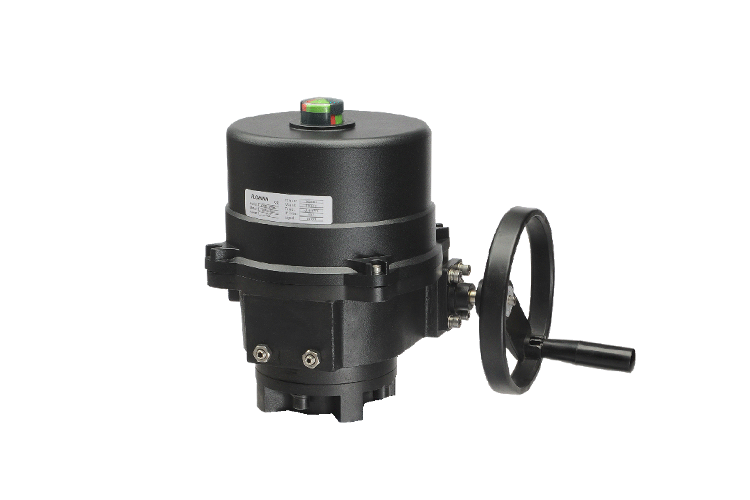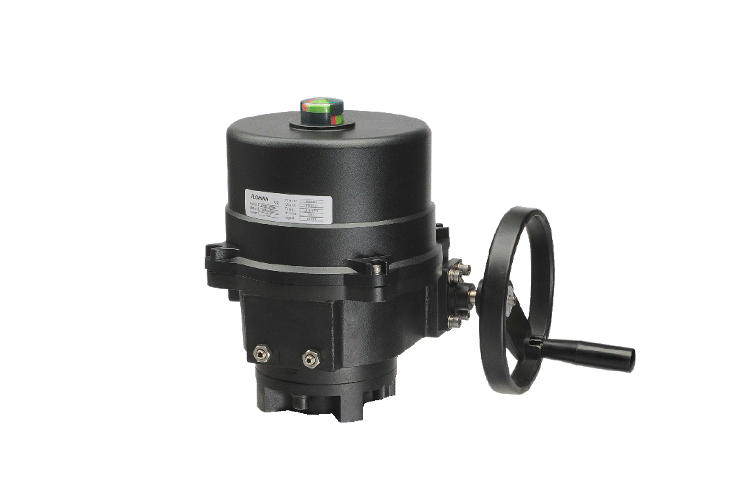








A Deep Dive into the Quarter-Turn Electric Valve Actuator
 Oct 29, 2025|
 View:1010
In the intricate tapestry of modern industrial automation, where processes are governed by precision and efficiency, there exists a class of components that perform their duties with quiet reliability, often unseen but fundamentally critical. Among these unsung heroes is the quarter turn electric valve actuator. This device is the indispensable muscle and brain behind a vast array of valves, transforming simple electrical commands into precise mechanical motion to control the flow of water, oil, gas, chemicals, and steam. This article explores the technology, applications, benefits, and selection criteria of these pivotal components that form the backbone of automated fluid control systems.
Defining the Core Technology
At its simplest, a quarter-turn electric valve actuator is an electromechanical device designed to automate valves that require a 90-degree rotation to move from fully open to fully closed positions. Common valve types that utilize this motion include ball valves, butterfly valves, and plug valves. The actuator's primary function is to replace or augment manual operation, allowing for remote control, integration into complex control systems, and rapid response to process conditions.
The fundamental operation of a quarter-turn actuator can be broken down into a sequence of events:
Electrical Input: The actuator receives a control signal. This is most commonly a simple on/off command (e.g., 24V AC/DC or 120V/240V AC), but can also be a modulating signal (e.g., 4-20 mA or 0-10V DC) for precise positioning.
Electric Motor: The electrical signal energizes a single or three-phase electric motor, which begins to spin.
Gear Reduction System: The high-speed, low-torque output of the motor is passed through a multi-stage gear train (typically planetary or worm gears). This crucial step dramatically increases the output torque while reducing the rotational speed to a level suitable for valve operation.
Output Drive: The final gear drives an output shaft, often a square or keyed drive, which interfaces directly with the stem of the valve. This shaft rotates exactly 90 degrees (a quarter turn).
Mechanical Stops: At the end of its travel, the actuator mechanically prevents further rotation. In on/off actuators, robust mechanical stops absorb the full force of the gearing, ensuring the valve is securely seated in the open or closed position.
Limit Switches: Integrated limit switches cut power to the motor once the predetermined open or closed position is reached, preventing overheating and damage.
For modulating applications, a feedback potentiometer or a more advanced absolute encoder is used. This component provides a real-time signal to a controller indicating the exact position of the valve (e.g., 45% open), enabling precise flow control.
Key Components and Enhanced Features
Beyond the basic mechanism, modern quarter-turn actuators are equipped with features that enhance their functionality, safety, and longevity.
Manual Override: A critical feature for maintenance or power failure scenarios. This is typically a handwheel or a crank that allows an operator to manually open or close the valve by disengaging the gear train.
Torque and Limit Switches: These are the actuators' primary protection mechanisms. Limit switchesprotect the actuator from over-travel, while torque switchesprotect the valve and actuator from damage due to excessive torque. If an obstruction prevents the valve from completing its stroke (e.g., a stuck ball valve or debris), the rising torque will trigger the torque switch, cutting power before any damage occurs. In modulating actuators, these are often set as torque limits.
Position Sensing: As mentioned, potentiometers or non-contact magnetic encoders provide precise position feedback, which is essential for process control loops and supervisory systems.
Enclosure Rating: The housing of an actuator is rated by standards like IP (Ingress Protection) or NEMA (National Electrical Manufacturers Association). A high rating like IP67 or NEMA 4X signifies that the unit is dust-tight and protected against water immersion or hose-downs, making it suitable for harsh outdoor or washdown environments.
Heaters and Insulation: In cold climates, internal space heaters prevent condensation from forming inside the enclosure, which could lead to electrical short circuits or corrosion.
Integrated Controls: Many actuators now come with built-in control modules that can accept various input signals and communicate via industry-standard protocols like HART, Foundation Fieldbus, or PROFIBUS, simplifying integration into digital plant architectures.

The Compelling Advantages Over Alternatives
The adoption of electric quarter-turn actuators has surged due to several distinct advantages over their pneumatic and hydraulic counterparts.
Simplicity of Installation: Electric actuators require only an electrical power and signal cable. This is often far simpler and cheaper to install than the network of air compressors, dryers, tubing, and fittings needed for a pneumatic system. There is no risk of air leaks, which can degrade performance.
Energy Efficiency: A pneumatic system must run a compressor continuously to maintain pressure, consuming significant energy even when idle. An electric actuator only draws power when it is moving, leading to substantial energy savings over time.
Precision and Stability: Electric actuators excel at holding a valve precisely in a modulated position without drifting, as there is no compressible air to cause movement. This provides superior control stability.
Cleanliness and Quiet Operation: Without the exhaust of compressed air, electric actuators are silent and clean, making them ideal for food and beverage, pharmaceutical, and other hygiene-critical industries.
Ease of Integration: Connecting an electric actuator to a Programmable Logic Controller (PLC) or Distributed Control System (DCS) is typically straightforward. Their compatibility with digital networks supports the goals of Industry 4.0, enabling predictive maintenance and advanced data analytics.
The main historical disadvantages of electric actuators—higher initial cost and lack of intrinsic explosion-proof safety—have been largely mitigated. Costs have become more competitive, and modern designs can easily be certified for use in hazardous areas with appropriate explosion-proof enclosures.
Diverse Applications Across Industry
The versatility of quarter-turn electric actuators sees them deployed in virtually every industrial sector:
Water and Wastewater Treatment: Automating large butterfly valves in distribution networks, controlling chemical dosing, and managing sludge handling.
Oil and Gas: Operating block and bleed ball valves on pipelines, wellheads, and in refining processes, often in extreme temperatures and pressures.
Power Generation: Controlling cooling water flow in thermal plants or feedwater systems, and isolating sections of the plant for maintenance.
Chemical and Petrochemical: Precisely modulating the flow of aggressive or sensitive chemicals in reaction vessels and transfer lines.
Marine and Offshore: Managing ballast, fuel, and cooling systems on ships and offshore platforms, where reliability is paramount.
HVAC: Automating butterfly valves in large commercial building heating and cooling systems to optimize energy use.
Selecting the Right Actuator: A Matter of Fit
Choosing the correct quarter-turn actuator is not a one-size-fits-all process. It requires a careful analysis of the application:
Valve Torque Requirements: The single most important factor. The actuator must generate more torque than the valve requires to operate under worst-case conditions (differential pressure, temperature). Both break torque (to open a stuck valve) and running torque must be considered.
Operation Type: Is simple on/off sufficient, or is modulating control needed?
Voltage and Power Supply: What is the available power source (e.g., 24V DC, 120V AC, 240V AC)?
Environmental Conditions: What are the ambient temperature, and the presence of moisture, dust, or corrosive elements? This determines the required IP/NEMA rating.
Hazardous Area Certification: Is the actuator required for a potentially explosive atmosphere (requiring ATEX, IECEx, or similar certification)?
Speed of Operation: How quickly does the valve need to open or close? This affects the required gearing.
Communication Needs: Is simple I/O enough, or is network integration required?
The quarter turn electric valve actuator is a masterpiece of practical engineering. It is a device that elegantly solves the problem of remote, reliable, and intelligent fluid control. By converting electrical energy into precise mechanical action, it has become a cornerstone of industrial automation, driving efficiency, safety, and productivity across the globe. From ensuring the water from our taps is safe to managing the complex flows of energy that power our world, this unseen workhorse continues to turn, quietly and reliably, at the heart of modern industry. As systems become smarter and more interconnected, the evolution of these actuators towards greater intelligence and connectivity will only solidify their critical role in the automated future.