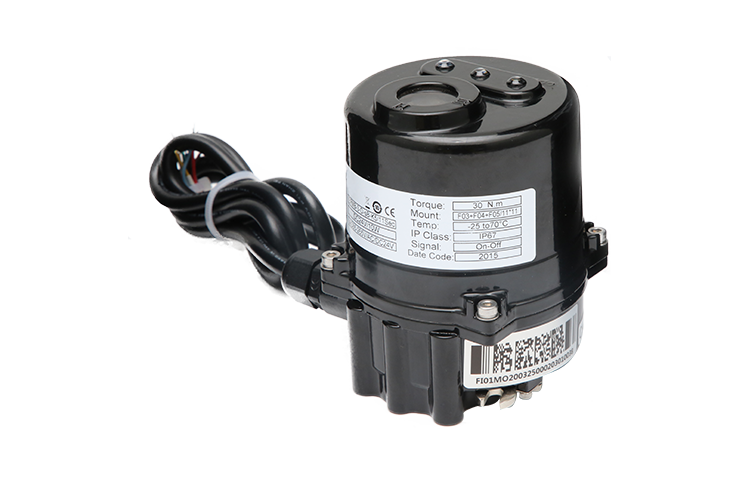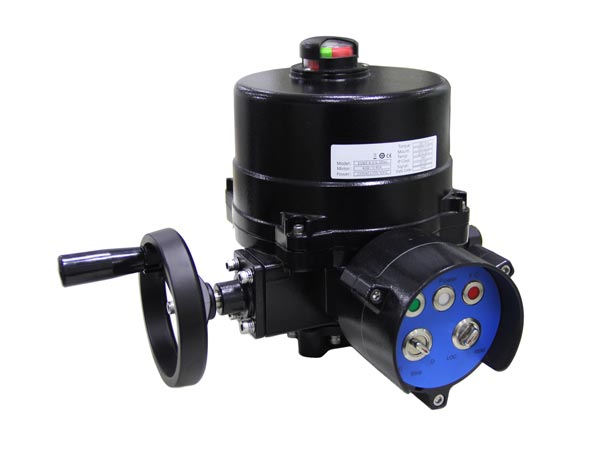








How to choose the best quarter turn electric actuator?
 Dec 12, 2025|
 View:887
The modern industrial landscape demands precision, efficiency, and reliability in every control mechanism. Among the essential components of fluid and gas control systems, the valve actuator stands out as the unsung hero, translating electronic signals into mechanical movement. For valves requiring a swift, 90-degree rotation—such as ball, butterfly, and plug valves—the quarter turn electric actuator represents the pinnacle of modern automation technology.
Selecting the "best" quarter-turn electric actuator is not about identifying a single, universal model, but rather matching a highly specialized device to the specific demands of a challenging application. This comprehensive guide explores the types, unparalleled advantages, key applications, and the role of specialized manufacturers like KANEDE Controls in this critical market.
1. Types of Quarter-Turn Electric Actuators
Quarter turn electric actuator are broadly classified based on their function, control sophistication, and emergency capabilities. While all perform the fundamental 90-degree rotation, their underlying technology and feature sets determine their suitability for various roles.
A. Based on Control Function
On/Off (Isolation) Actuators: These are the simplest type, designed to move the valve to a fully open (0°) or fully closed (90°) position. They are robust, cost-effective, and ideal for block valve service where rapid isolation is the primary goal.
Modulating (Regulating) Actuators: These are the most sophisticated, capable of stopping and holding the valve at any intermediate position (e.g., 25%, 50%, 75% open). They employ advanced features like position feedback (encoders/potentiometers) and often accept analog control signals (e.g., $4-20 \text{ mA}$ or $0-10 \text{ VDC}$) to finely regulate flow, pressure, or temperature. This precision makes them the standard for process control.
Intelligent/Smart Actuators: A subset of modulating actuators, these units include built-in microprocessors for enhanced diagnostics, non-intrusive setup, data logging, and communication over fieldbus protocols (e.g., Modbus, Profibus). They are central to modern Industry 4.0 and IoT systems.
B. Based on Motor/Mechanism
Standard Single-Phase/Three-Phase AC Motors: The workhorse of industrial actuation, providing high torque for demanding applications.
DC Motors: Often used for smaller valves or where battery power/backup is required (e.g., remote sites or fail-safe systems).
Stepper/Servo Motors: Increasingly used in high-precision, low-torque modulating applications, offering exceptional control over speed and position.
C. Based on Fail-Safe Capability
Standard Actuators: Rely on external power to operate. In a power failure, the valve remains in its last position.
Fail-Safe Actuators (Battery Backup/Spring-Return): Designed for critical safety applications. In the event of a power loss, these actuators utilize a stored energy source (battery or mechanical spring) to drive the valve to a predetermined safe position (Fail-Close or Fail-Open).
2. Advantages of Electric Actuators
The superior performance and utility of electric actuators, particularly in the quarter-turn configuration, stem from their inherent design, which leverages the strengths of electrical power and digital control.
Precision and Control
Electric actuators offer unparalleled precision, especially modulating types. They achieve high repeatability and accurate positioning thanks to integrated electronic control boards and feedback devices. This allows for fine-tuning of processes, resulting in improved product quality and consistency.
Energy Efficiency
Unlike pneumatic and hydraulic systems, which require continuous energy input to maintain pressure (even when the valve is static), electric actuators are energized only when they are actively moving the valve. This intermittent power usage translates into significant long-term energy savings and a reduced operational carbon footprint.
Low Maintenance and Clean Operation
Quarter turn electric actuator are inherently cleaner and simpler. They eliminate the need for costly external compressors, complex piping, and dedicated control cabinets required for pneumatic systems. There is no risk of leaks (air, hydraulic fluid, or oil) that can contaminate the environment or the process media, leading to exceptionally low maintenance requirements and a longer operational lifespan.
Seamless Integration and Intelligence
Modern electric actuators are easily integrated into Distributed Control Systems (DCS), Supervisory Control and Data Acquisition (SCADA), and Programmable Logic Controllers (PLC). The availability of digital communication protocols makes them "smart" devices, providing valuable data on valve cycles, diagnostics, torque profiles, and operational status, enabling predictive maintenance and remote monitoring.
Quiet Operation
Compared to the continuous noise generated by air exhaust and compression in pneumatic systems, electric actuators operate quietly, making them the preferred choice for environments where noise pollution is a concern.

3. Key Applications for Quarter-Turn Electric Actuators
The quarter turn electric actuator is a versatile tool, indispensable across a vast spectrum of industries due to its speed, torque, and precision.
Industry | Typical Application | Key Benefit Leveraged |
Water & Wastewater Treatment | Control of butterfly valves in filtration and pumping stations. | Precision flow regulation (Modulating) and remote monitoring of widely distributed assets. |
HVAC & Building Management | Dampers and large balancing valves in ventilation systems. | Quiet operation and energy efficiency for precise climate control. |
Oil & Gas (Midstream/Downstream) | Pipeline isolation, tank farm valve control. | High torque output for large valves, and fail-safe operation for emergency shutdown (ESD) systems. |
Chemical & Petrochemical | Batch processing and mixing control. | Clean operation (no risk of air/fluid contamination) and precise batch volume regulation. |
Power Generation | Cooling water control and boiler feed systems. | High reliability and integration into complex plant safety systems. |
Food & Beverage | Tank switching and flow diversion on sanitary ball valves. | Hygienic design and easy washdown compatibility (high ingress protection rating - IP). |
4. KANEDE Controls: A Specialization in Valve Automation
While quarter turn electric actuator offer many advantages, the specific needs of a high-torque application sometimes require the raw power and intrinsic safety of pneumatic actuation. This is where the specialization of manufacturers like KANEDE Controls becomes crucial.
KANEDE Controls, with its 20,000 M² factory base located in Changzhou city in Jiangsu province, China, is a key global provider focused on delivering high-quality solutions for both pneumatic and electric valve automation.
KANEDE's Focus: Power and Reliability
Although the search for the best electric actuator is key, KANEDE’s core strength lies in its scotch yoke pneumatic actuators. This specialization highlights a critical choice in actuator selection:
Product Specialty: KANEDE’s specialty includes double-acting pneumatic actuators and scotch yoke single-acting pneumatic actuators.
High-Torque Capability: The scotch yoke design is renowned for delivering extremely high breakout torque at the start of the stroke (open or close), making it the optimal mechanical choice for operating large, high-pressure, or sticky valves that have been left in one position for a long time. KANEDE supports this with actuators offering torque ranges up to 4250Nm (at 5 bar).
Applications: Their pneumatic products are widely trusted in critical heavy industries where intrinsic safety and high force are paramount, including petrochemical, natural gas, steel metallurgy, and air separation.
Value Proposition: KANEDE offers this high-durability actuation, along with pneumatic cylinders or total actuation packages, as a cost-effective product and services for a one-stop solution to customers.
By offering solutions across both pneumatic and electric fields, KANEDE provides the comprehensive choice necessary for process engineers to select the absolute "best" tool—be it a cutting-edge modulating electric unit for precision, or a high-force, intrinsically safe pneumatic actuator for critical block service.
The "best" quarter turn electric actuator is the one that successfully blends high-precision control, energy efficiency, and long-term reliability with the specific torque and environmental requirements of the application. The market offers a wide variety, from simple on/off models to highly sophisticated modulating and intelligent types.