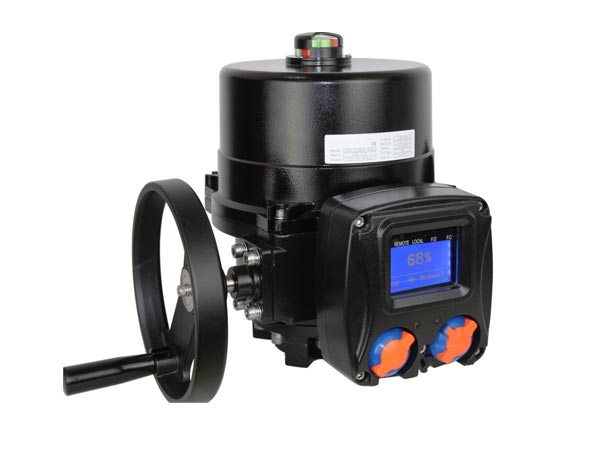








What Does a Smart Electric Actuator Do?
 Apr 25, 2025|
 View:1901
Smart electric actuators represent a significant advancement in automation technology, combining traditional actuator functions with sophisticated control systems and communication capabilities. They are integral to modern industrial processes, smart buildings, and various applications across sectors such as manufacturing, oil and gas, water treatment, and more.
Types of Actuators
Electric Actuators: Utilize electric motors to produce motion. They are known for precise control and ease of integration with digital systems.
Pneumatic Actuators: Use compressed air to create motion. They are often favored for their speed and simplicity in applications requiring rapid movement.
Hydraulic Actuators: Rely on pressurized fluid to generate motion. They are powerful and suitable for heavy-duty applications but require more complex maintenance.
What Makes an Actuator "Smart"?
A smart electric actuator incorporates advanced technologies such as sensors, microcontrollers, and communication interfaces, enabling it to perform more than just basic motion control. Here are some key features that define a smart actuator:
1. Sensors and Feedback Mechanisms
Smart electric actuators are equipped with sensors that monitor various parameters, such as position, pressure, temperature, and vibration. This feedback allows the actuator to adjust its operation dynamically, ensuring optimal performance and reliability.
2. Communication Capabilities
Smart electric actuators can communicate with other devices and systems through various protocols, including Modbus, Profibus, Ethernet/IP, and wireless options like Wi-Fi or Zigbee. This connectivity facilitates integration into larger automation systems and enables remote monitoring and control.
3. Advanced Control Algorithms
These actuators often incorporate sophisticated control algorithms that enhance their precision and efficiency. For example, they can employ predictive maintenance techniques, analyzing performance data to anticipate failures before they occur.
4. User Interface and Integration
Smart electric actuators may feature user-friendly interfaces that allow operators to configure settings, monitor performance, and troubleshoot issues. They can also integrate seamlessly with supervisory control and data acquisition (SCADA) systems and other industrial software.

Benefits of Smart electric Actuators
The integration of intelligence into actuators brings several advantages:
1. Enhanced Performance
Smart electric actuators provide greater precision in motion control, leading to improved process efficiency. They can adjust their actions based on real-time data, optimizing performance according to specific operational conditions.
2. Improved Reliability
With built-in sensors and predictive maintenance capabilities, smart electric actuators can detect anomalies and potential failures early. This proactive approach reduces downtime and maintenance costs, enhancing overall system reliability.
3. Energy Efficiency
By optimizing their operation based on real-time feedback, smart electric actuators can significantly reduce energy consumption. This not only lowers operating costs but also contributes to sustainability efforts within organizations.
4. Remote Monitoring and Control
The communication capabilities of smart actuators enable remote access, allowing operators to monitor systems from anywhere. This feature is particularly beneficial in industries where equipment is spread across large areas or in hazardous environments.
5. Flexibility and Scalability
Smart electric actuators can easily be integrated into new or existing systems, making them a flexible solution for various applications. Their scalability allows organizations to expand their automation capabilities without extensive overhauls.
Applications of Smart Actuators
Smart electric actuators are utilized across diverse industries, each benefiting from their advanced capabilities:
1. Manufacturing
In manufacturing environments, smart electric actuators are used to control assembly lines, robotic arms, and conveyor systems. Their precision and speed enhance production efficiency and product quality.
2. Oil and Gas
In the oil and gas sector, smart actuators control valves and flow rates in pipelines and refineries. Their ability to operate in extreme conditions while providing real-time data is crucial for safety and efficiency.
3. Water Treatment
Smart electric actuators are essential in water treatment facilities, managing the flow of water and chemicals. Their feedback mechanisms help maintain optimal conditions for purification processes.
4. Building Automation
In smart buildings, these actuators control HVAC systems, lighting, and security systems. By adjusting operations based on occupancy and environmental conditions, they improve comfort and energy efficiency.
5. Automotive
In the automotive industry, smart electric actuators are found in various applications, including electronic throttle control, automatic braking systems, and advanced driver-assistance systems (ADAS). They enhance vehicle performance and safety.
Smart electric actuators are transforming the landscape of automation, providing enhanced performance, reliability, and efficiency across various industries. Their ability to integrate with IoT systems and leverage real-time data makes them invaluable in modern applications. As technology continues to evolve, the role of smart actuators will only become more significant, shaping the future of automation and control systems. Organizations that invest in these advanced technologies will be better positioned to thrive in an increasingly competitive and data-driven world.