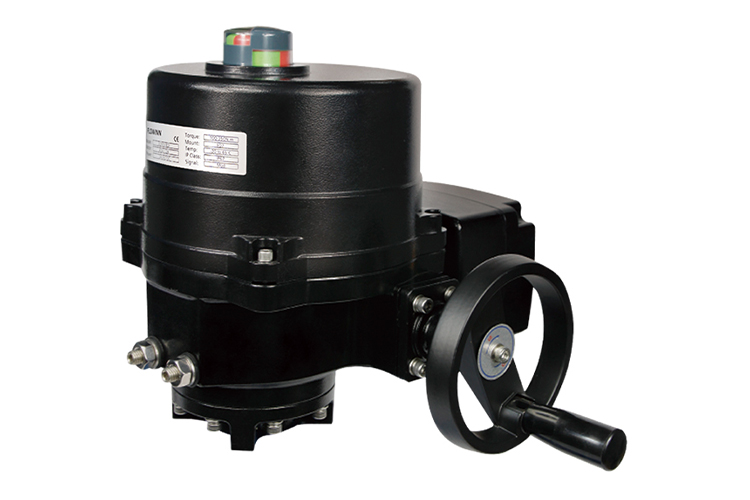








Fail-Safe Pneumatic Actuators: Ensuring Safety and Reliability in Industrial Systems
 Mar 14, 2025|
 View:1273
Fail-safe pneumatic actuators are essential components in modern industrial automation and control systems. These actuators are specifically designed to ensure safety and maintain process integrity in the event of a system failure. Unlike standard actuators, fail-safe actuators are equipped with mechanisms that automatically move them to a predefined safe position when the control signal or air supply is interrupted.
How Fail-Safe Pneumatic Actuators Work
During normal operation, compressed air is supplied to the actuator, which moves the valve or mechanism to the desired position. In the event of a failure, such as loss of control signal or air supply, a fail-safe mechanism is triggered. This mechanism can be a spring return, a check valve, or another design that ensures the actuator moves to a safe position. The safe position can be fully open, fully closed, or a neutral position, depending on the application requirements.
Types of Fail-Safe Pneumatic Actuators
There are several types of fail-safe pneumatic actuators, each with unique features and applications:
- Spring-Return Actuators: These actuators use a spring mechanism that compresses when the actuator moves away from its starting position. When the air supply is cut off, the spring returns the actuator to its safe position.
- Double-Acting Actuators: These require air pressure to maintain position in both directions and revert to a safe position when the air supply is lost.
- Check-Valve Actuators: These incorporate a check valve that allows air to escape in the event of a failure, causing the actuator to move to the safe position.
Applications of Fail-Safe Pneumatic Actuators
Fail-safe pneumatic actuators are widely used across various industries due to their reliability and safety features:
- Process Control: They are crucial in chemical, pharmaceutical, and food processing industries, where maintaining process safety and flow rates is essential.
- Machine Safety: In machinery, fail-safe actuators ensure that the system moves to a safe state, such as stopping or retracting guards, in the event of a failure.
- Emergency Shut-Off: Common in power plants and industrial facilities, these actuators automatically shut off systems during critical failures.
- Medical Equipment: Fail-safe actuators are used in medical devices to ensure they revert to a non-hazardous state in case of malfunction.

Benefits of Fail-Safe Pneumatic Actuators
The primary benefits of fail-safe pneumatic actuators include:
- Enhanced Safety: They provide an additional layer of safety by ensuring the system defaults to a safe state during failures.
- Reliability: These actuators reduce the risk of accidents and downtime by maintaining consistent operation even during system failures.
- Compliance: They help meet safety standards and regulations in various industries, ensuring legal compliance.
- Versatility: Fail-safe pneumatic actuators are suitable for a wide range of applications, from simple on/off control to complex motion control systems.
Design Considerations
When selecting a fail-safe pneumatic actuator, several factors must be considered:
- Duty Cycle: The actuator should be designed to handle the specific duty cycle of the application.
- Environmental Conditions: Factors such as temperature, humidity, and exposure to chemicals should be considered.
- Actuator Size: The size should be appropriate for the force and torque requirements of the application.
- Mounting Options: The actuator should be easily mountable and integrable into the existing system.
Future Developments
As technology advances, fail-safe pneumatic actuators are expected to become even more efficient and versatile. Future developments may include:
- Smart Actuators: Integration of sensors and IoT technology for real-time monitoring and predictive maintenance.
- Energy Efficiency: Development of actuators that consume less compressed air, reducing energy consumption.
- Customizable Fail-Safe Mechanisms: Advances in design to allow for more customized fail-safe mechanisms tailored to specific applications.
Fail-safe pneumatic actuators play a vital role in ensuring the safety and reliability of industrial systems. By automatically reverting to a safe position in the event of a failure, these actuators help prevent accidents and maintain process integrity. As technology continues to evolve, the capabilities and efficiency of fail-safe pneumatic actuators will only improve, offering even greater benefits to industries that rely on them for safety-critical applications.