





How does a pneumatic actuator work?
 Dec 10, 2024|
 View:1442
Basic Components of a scotch yoke Pneumatic Actuator
Piston: This is the moving part that converts the pressure of the compressed air into mechanical force.
Cylinder: The cylinder houses the piston and provides a sealed environment for the air pressure to act upon the piston.
Valve: The valve controls the flow of compressed air into and out of the cylinder.
Diaphragm: In some designs, a diaphragm is used to separate the air chamber from the mechanical components and to transmit the force from the air pressure to the mechanical system.
Working Principle
Introduction of Compressed Air: The process begins with the introduction of compressed air into the scotch yoke pneumatic actuator via a control valve. This air enters the cylinder of the actuator.
Pressure Buildup: As the air pressure builds up within the cylinder, it drives the piston, causing it to move in a reciprocating motion. This piston is connected to a connecting rod, which can be used to perform work or actuate a mechanism.
Mechanical Motion: The movement of the piston translates the compressed air energy into mechanical motion. This motion can be linear or rotary, depending on the design of the actuator.
Exhaust and Return: When the supply of compressed air is stopped, the air within the cylinder is discharged through an exhaust port, allowing the piston to return to its original position.
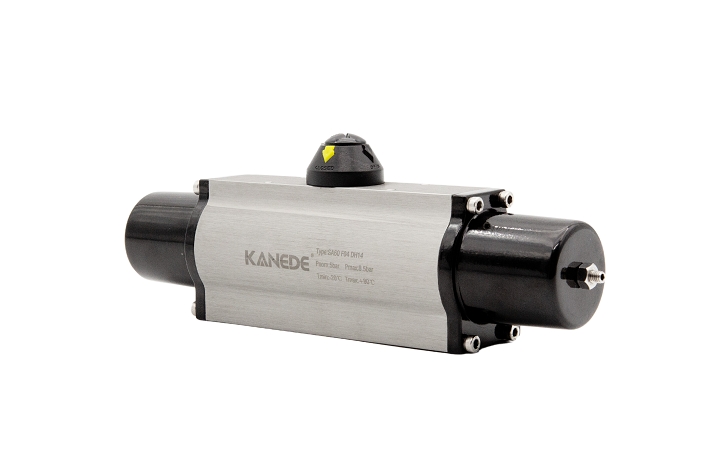
Types of scotch yoke Pneumatic Actuators
Linear Actuator: This type of actuator converts the rotary motion of a motor into a straight or linear-pull/push motion. They are ideal for applications that require a few pounds of force to tilt, lift, pull, or push. Linear actuators are used in dampers and valves, industrial machines and machine tools, computer peripherals (like printers and hard drives), and in numerous places where linear motion is an important factor.
Rotary Actuator: A rotary actuator generates rotary torque or motion. The simplest actuators are purely mechanical, where linear movement in one direction causes rotation. The most common actuators are electrical actuators. Others can be operated hydraulically or pneumatically or may also use the energy amassed in the springs.
Advantages of scotch yoke Pneumatic Actuators
Rapid Actuation/Response Time: scotch yoke Pneumatic actuators can respond quickly to changes in control signals.
Simple Design and Operation: The design of pneumatic actuators is relatively simple, making them easy to operate and maintain.
Excellent Reliability: These actuators are highly reliable and can perform consistently over long periods.
Safe to Use Around Flammable Materials: Since scotch yoke pneumatic actuators do not require electricity, they are safe to use in environments where there is a risk of fire or ignition.
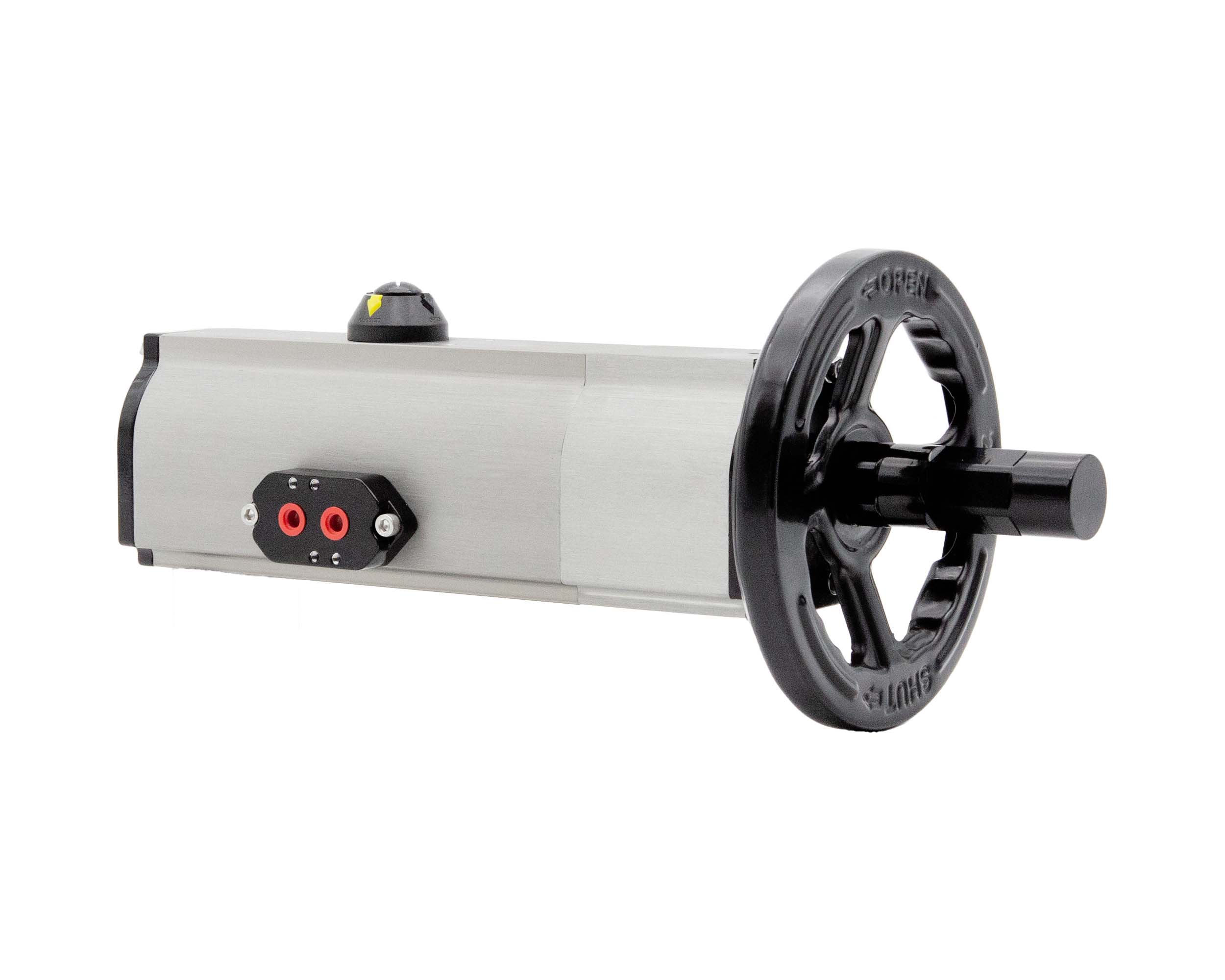
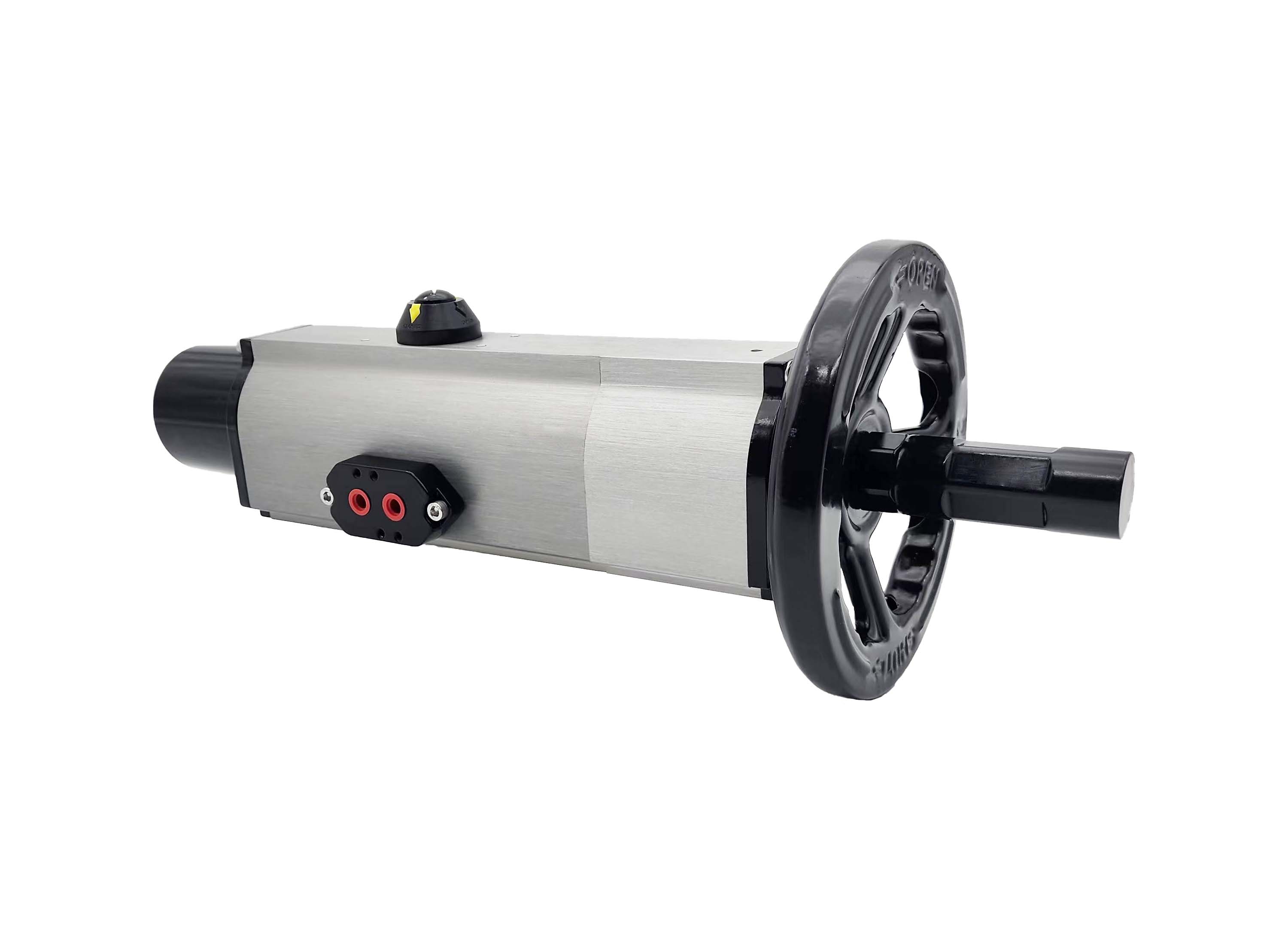
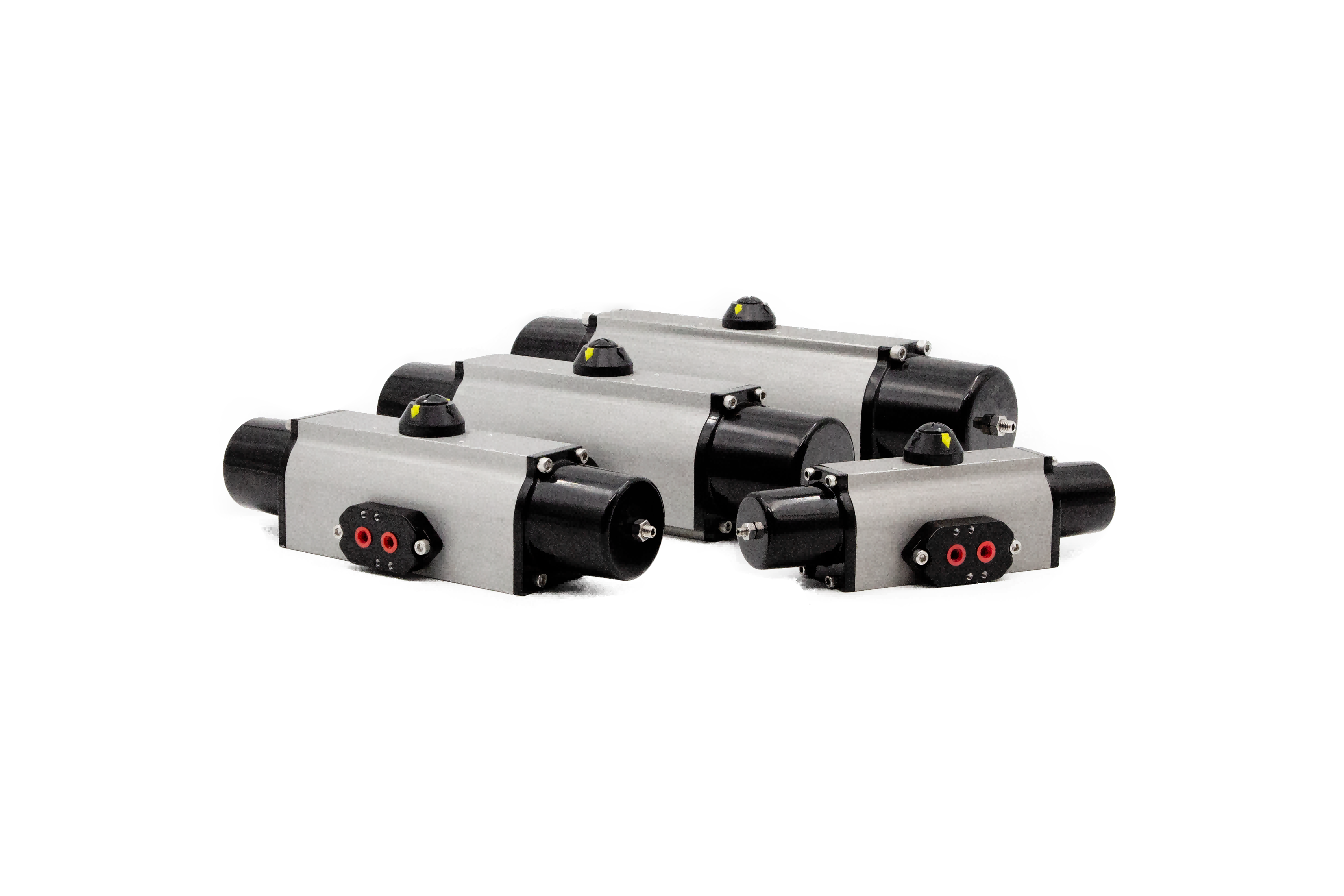
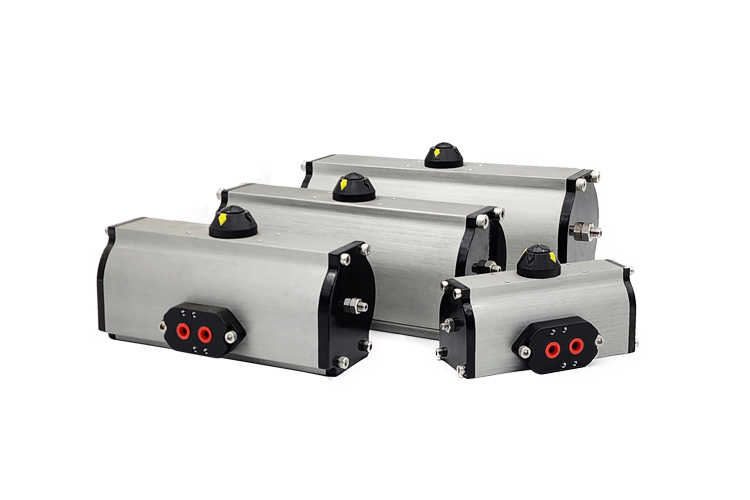
Pneumatic actuator factory KANEDE produces high quality solutions for pneumatic and electric valve automation. With 20000 M² factory base located in Changzhou city in Jiangsu province China, we manufacture and provide our customers with reliable valve actuators.
Our specialty product including double acting pneumatic actuators and single acting pneumatic actuators with cylinder bores ranging from 40mm to 220mm and torque ranges from 22Nm to 4250Nm (5bar).


Recent News
1.Take you through the pneumatic actuators
2023-03-082.The difference between double acting pneumatic actuators and single acting pneumatic actuators
2023-03-143.Integrating Spring return pneumatic actuators into your industrial operations
2023-04-264.What are the key features of a double acting pneumatic actuator?
2023-07-05